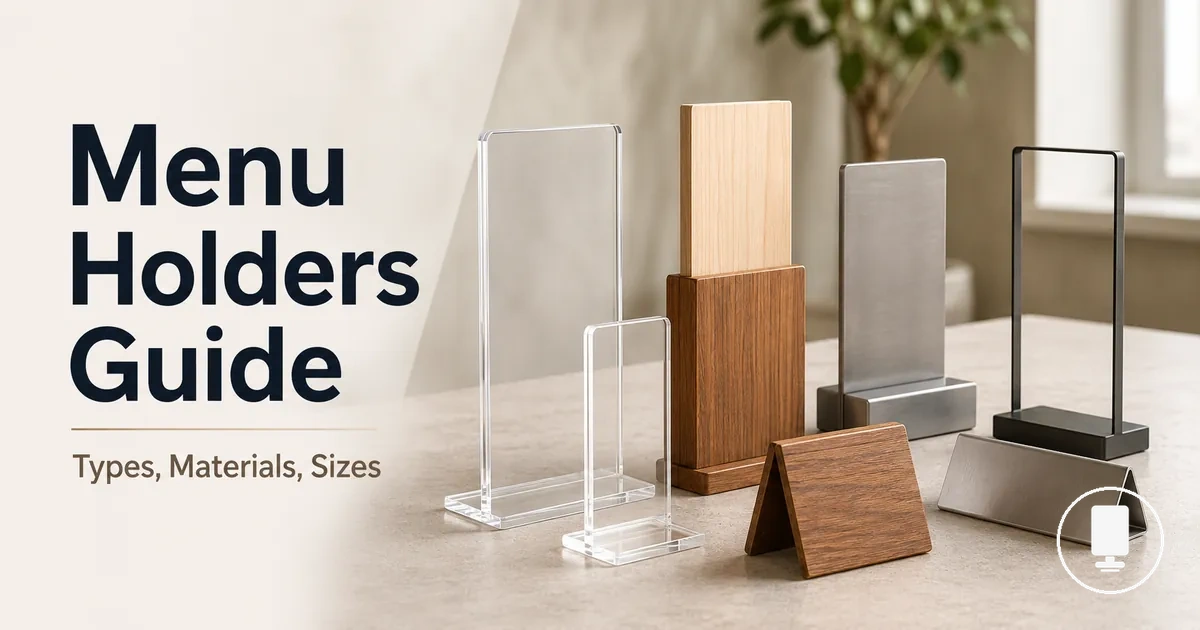
Menu holders for restaurant menu presentation and selection
Menu holders are display tools that hold printed or inserted menus so customers can read them clearly during restaurant service. This page treats menu holders as restaurant menu presentation tools, not as individual products or merchant offers.
Restaurant menu holders can support menu presentation by improving readability, organizing table menu holders, and keeping menu display choices consistent with the dining setting. The right selection depends on how the menu will be shown, handled, updated, cleaned, and matched to the restaurant’s visual style. Fit and usefulness can vary by type, materials, sizes, placement, value, and care.
A table-service restaurant may need compact table menu stands with visible inserts, while a counter-service setting may need holders that make the menu easy to notice before ordering. Menu holders differ from menu boards, wall signage, and unrelated display fixtures because their main role is to present menus at the point where customers read, choose, or compare items. The next section grounds that role by explaining what menu holders do in restaurant service.
What menu holders do in restaurant service
Menu holders are tools that display printed menus or menu inserts in restaurant service settings. They keep menu information visible and organized for customers during ordering and dining. Menu holders support menu presentation by improving visibility and supporting the service purpose of the menu.
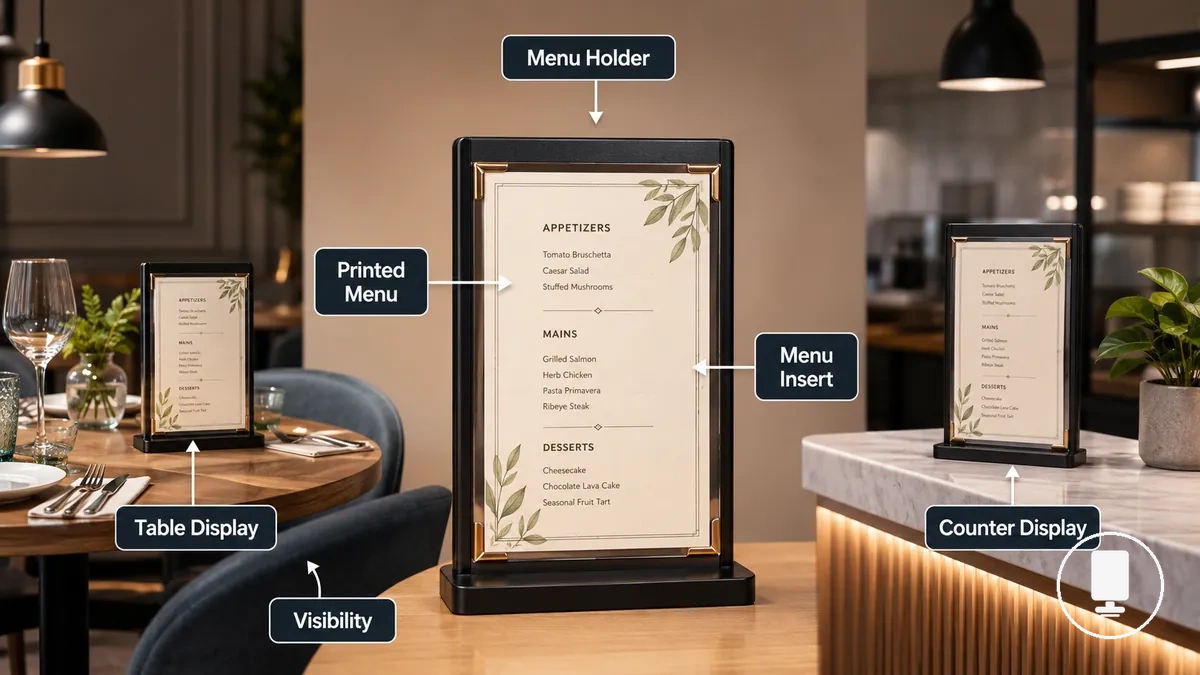
Menu holders are commonly used for table display and counter display where customers need clear access to menu information. They can support printed menus, menu inserts, and menu cards depending on the holder format and presentation needs. For a more detailed definition of what menu holders are, they can be understood as display tools that hold menu content for customer viewing. Menu holders differ from menu boards or permanent signage because they are intended to present printed menus within the restaurant service environment.
A restaurant may place menu card holders on dining tables or position menu stands near a counter display to make menu content easier to view. This example illustrates menu presentation and placement without introducing selection or purchasing criteria.
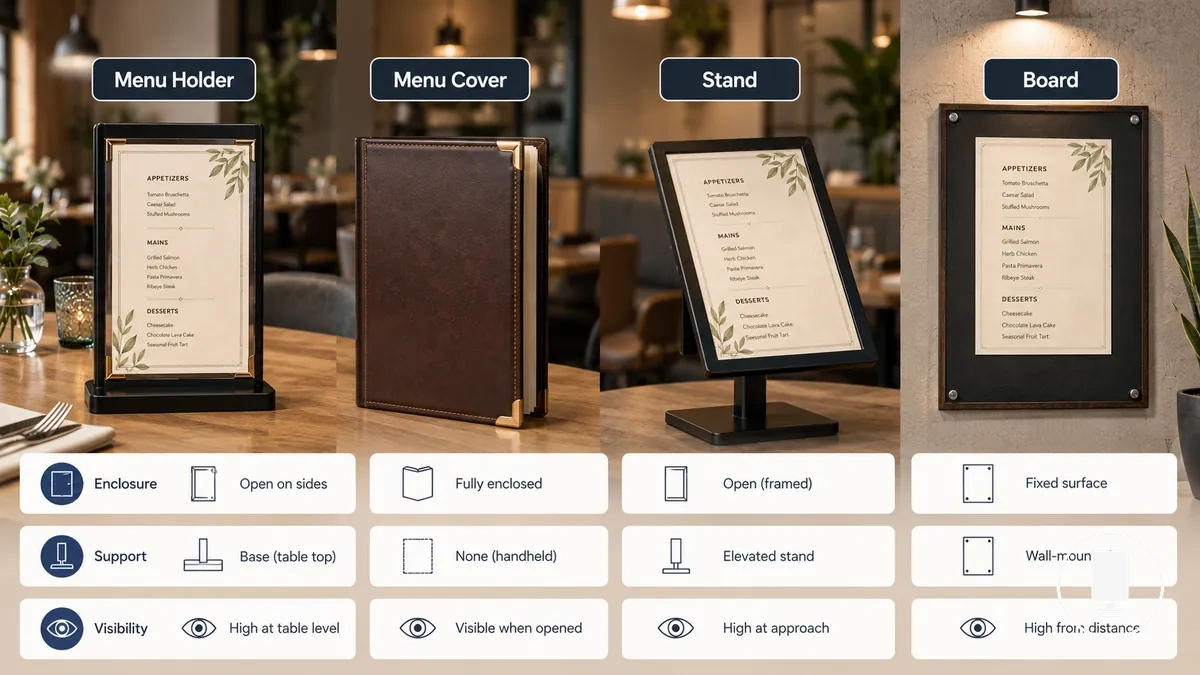
Menu holders, menu covers, stands, and boards
Menu holders, menu covers, stands, and boards differ by enclosure, support, mobility, and viewing behavior. Menu holders present menu pages, menu covers enclose and organize menu content, stands provide supported viewing angles, and boards function as broader display surfaces. This section compares those display formats to clarify their distinct roles.
| Display format | What it supports | Where it fits | Boundary note |
|---|---|---|---|
| Menu holders | Printed menus and menu inserts | Tabletop or counter presentation | Focused on menu visibility and access |
| Menu covers | Menu pages within an enclosure | Dining tables and menu presentation settings | Provides page enclosure and presentation support |
| Stands | Menu display with angled support | Tables, counters, or reception areas | Emphasizes support and viewing angle |
| Boards | Displayed menu information | Wall-mounted or fixed display locations | Acts as a broader display surface rather than a table-facing holder |
Each format may fit a different use case depending on placement conditions, visibility needs, and how menu content is presented. Menu holders and menu covers are often suited to table-facing presentation, while stands may improve visibility when an elevated display angle is useful. Boards may suit more fixed placement conditions because they function as display surfaces rather than portable menu presentation tools. Practical selection depends on the display environment and menu format rather than a universally superior option.
Main types of menu holders
Menu holder types are grouped by display function, visibility, stability, update ease, and table footprint. Tabletop stands, clips, inserts, covers, table menu holders, and freestanding holders each support menu presentation in a different format. Type selection usually depends on the display format and restaurant service setting.
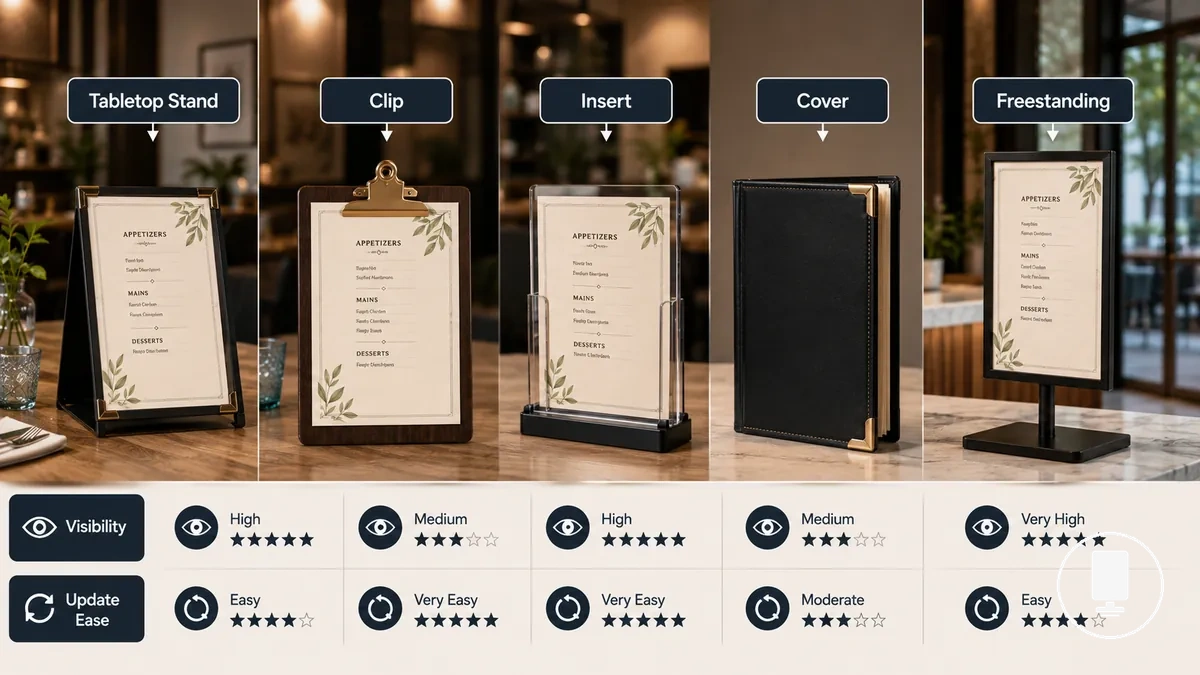
The table below organizes common menu holder formats by what each type does, where it may fit, and how it can affect the decision. It groups type families rather than individual products.
| Type | Display function | Suitable condition | Decision effect |
|---|---|---|---|
| Tabletop stands | Support menus in an upright viewing position | Table service or customer-facing table display | May improve visibility while managing table footprint |
| Clips | Hold single sheets or menu inserts | Menus that change often or need quick replacement | May make updates easier when pages change |
| Inserts | Present replaceable menu pages | Menus with periodic content or page changes | Can support flexible menu updates |
| Covers | Enclose and organize menu pages | Table menu holders used for structured presentation | May support page organization and handling |
| Freestanding holders | Display menus without table support | Counter service or promotional display areas | Can increase placement flexibility when space varies |
Tabletop stands often suit seated dining where visibility and space balance matter. Clips and inserts may fit menus that change because the displayed page can be replaced more easily. Freestanding holders can support counter service or promotional display when placement needs vary by location. For a deeper classification of types of menu holders, the dedicated guide expands the format-specific use cases.
Tabletop stands, clips, inserts, and covers
Tabletop stands, clips, inserts, and covers change menu presentation through different holding mechanisms, handling conditions, and update patterns. A high-turnover menu may favor formats that simplify menu changes, while a fixed-menu setting may place more emphasis on presentation consistency. The local format distinction depends on holder format, update ease, and service suitability.
- Tabletop stands classify menus through upright support, connect visibility with stable placement, and may suit table service when clear viewing is important.
- Clips group menu pages through a simple holding mechanism, support menu change handling, and may suit settings with more frequent updates.
- Inserts connect menu presentation with replaceable pages, qualify for greater update ease through page replacement, and may suit menus that change periodically.
- Covers classify menu content through enclosed page organization, connect handling with structured presentation, and may suit fixed-menu formats or less frequent updates.
- Table menu holders group these formats under a shared presentation role, while service suitability depends on menu format, handling conditions, and display needs.
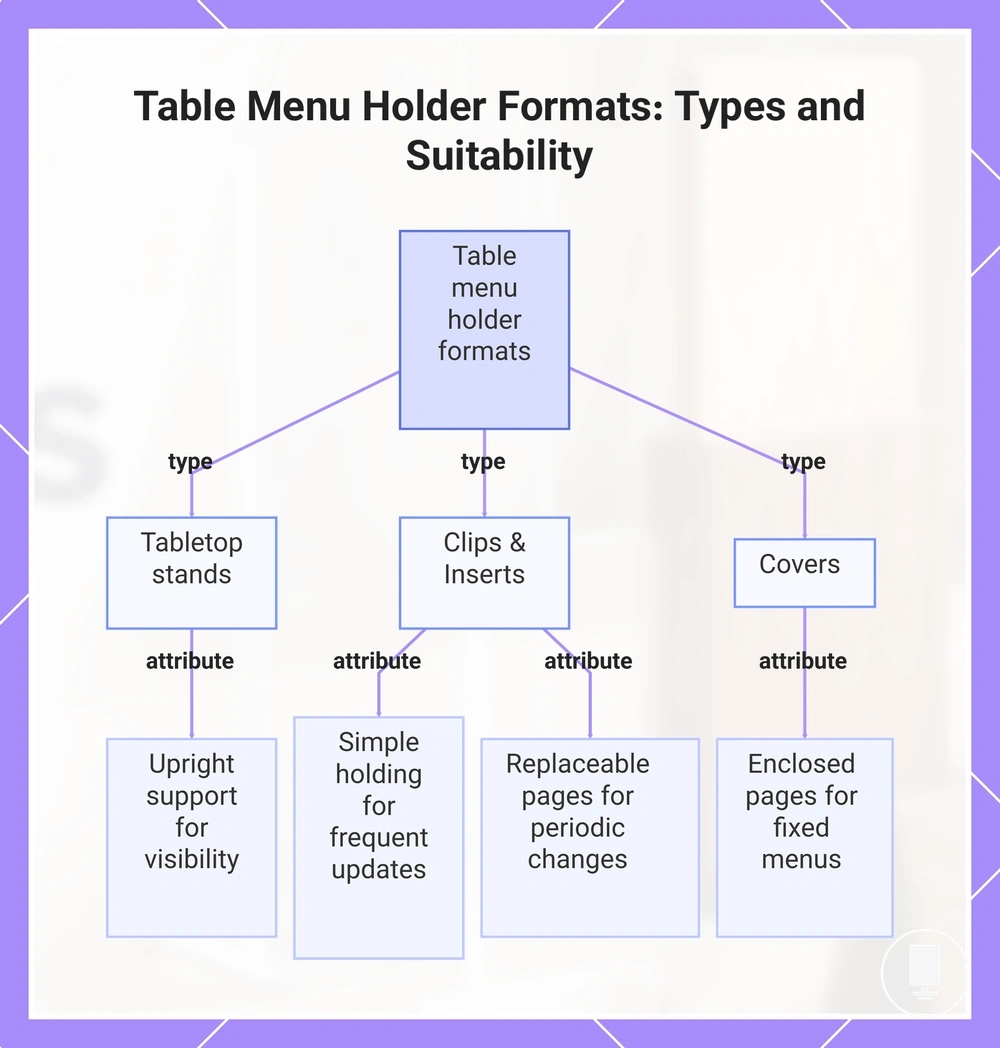
Each holder format supports a different balance of visibility, stability, handling, and menu-change requirements. The classification remains focused on format and function rather than individual product variations.
This chart classifies table menu holder formats into three categories and highlights their key attributes for different menu update frequencies.
Single-view, double-sided, and multi-page formats
Single-view, double-sided, and multi-page formats differ by how much information is visible at one time and how much interaction is needed to access additional content. A suitable format depends on menu length, table space, and customer browsing behavior. The distinction being compared is page visibility, flipping behavior, and menu interaction.
| Format | Page capacity | Visibility condition | Best-fit service scenario |
|---|---|---|---|
| Single-view | One visible menu surface | Content is available without page turning | May suit shorter menus or limited table space |
| Double-sided | Content divided across two sides | Requires turning the holder or menu cover to view additional content | May suit moderate menu length with a controlled table footprint |
| Multi-page | Multiple menu sections or pages | Requires page turning to access more information | May suit broader menus with more categories or details |
| Folded multi-panel | Multiple visible panels within one display format | Can expose more information with fewer page changes | May suit menus that balance visibility and browsing convenience |
Menu holders, menu covers, stands, and boards can support different display format choices through their enclosure, support method, and placement conditions. Single-view formats may improve immediate visibility because all content appears at once, while multi-page formats may accommodate longer menus when additional browsing is acceptable. Double-sided and folded formats often provide a middle ground between page capacity and interaction effort. A practical selection signal is whether customers need quick scanning or more detailed menu exploration.
No display format is universally suitable because visibility, browsing behavior, and available space vary by use case. The more appropriate choice depends on how much menu information needs to be shown and how customers are expected to interact with it.
Menu holder materials and appearance differences
Menu holder materials affect appearance, durability, cleaning behavior, and how menu presentation aligns with the restaurant environment. Material choice can influence visibility, surface wear, and maintenance effort, while outcomes often depend on finish quality, thickness, usage frequency, and cleaning method. The main material variables are appearance, durability conditions, cleaning requirements, and presentation style.
Different menu holder materials can suit different service environments, from casual dining to premium presentation and high-turnover restaurant settings. The table below compares material categories by appearance signal, cleaning or wear condition, and context suitability.
| Material | Appearance signal | Cleaning or wear condition | Best-fit context |
|---|---|---|---|
| Acrylic | Clear visibility and modern presentation | May show surface marks depending on cleaning method and use intensity | Often suits high-turnover settings that prioritize menu visibility |
| PVC | Simple and practical appearance | Can support wipe-clean handling under routine service conditions | May suit casual dining environments |
| Wood | Natural texture and warmth | Appearance and wear can vary with finish quality and care practices | May suit restaurants seeking a traditional presentation style |
| Leather-look | Structured and refined appearance | Often supports surface wiping, although wear depends on use intensity and finish quality | May suit premium dining presentation |
| Metal | Solid appearance and visual stability | Surface condition may vary with finish type and handling frequency | May suit high-use environments where stability is valued |
Menu holder materials compare through trade-offs between appearance, cleaning requirements, and durability rather than through a universal ranking. Acrylic may emphasize visibility, wood may emphasize texture, metal may emphasize stability, and leather-look surfaces may emphasize presentation, but outcomes depend on maintenance practices and service conditions. Casual, premium, and high-turnover restaurant contexts can prioritize different material attributes for different reasons. For a deeper comparison of menu holder materials, the dedicated guide expands on material-specific characteristics and maintenance considerations.
Acrylic, PVC, wood, leather-look, and metal options
Acrylic, PVC, wood, leather-look, and metal options affect visibility, texture, weight, cleaning expectations, and durability in different ways. Menu holder material can change how menus are presented and maintained, but outcomes often depend on finish quality, cleaning method, and use intensity. The local comparison focuses on how each material balances appearance, handling, and restaurant condition.
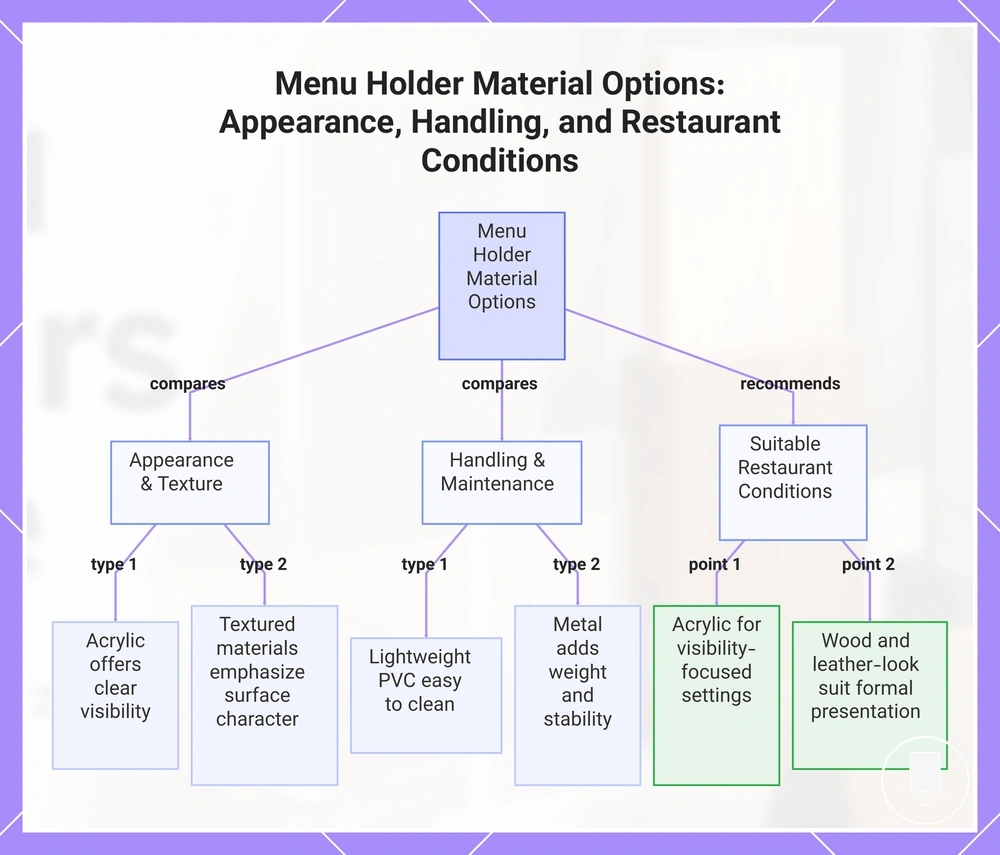
Clear display materials such as acrylic often emphasize visibility, while opaque or textured materials such as wood, leather-look, and metal may emphasize surface character and presentation. The points below compare common material attributes and practical limitations.
- Acrylic: Acrylic supports clear visibility and a modern appearance, but surface scratches may become more noticeable depending on cleaning method and usage frequency. It may suit restaurant conditions where menu visibility is important.
- PVC: PVC often provides a lightweight, wipe-clean surface, although appearance may be more functional than decorative. It may suit casual-use restaurant conditions with frequent menu handling.
- Wood: Wood adds texture and visual warmth, but care requirements can vary with finish type and exposure conditions. It may suit restaurant conditions that favor a traditional presentation style.
- Leather-look: Leather-look holders can provide a structured appearance and support routine cleaning, although wear patterns may vary with use intensity. They may suit restaurant conditions focused on formal menu presentation.
- Metal: Metal options often add weight and stability, but surface appearance can depend on finish quality and handling frequency. They may suit restaurant conditions where holder stability is valued.
This chart compares menu holder materials by appearance, handling, and recommended restaurant settings.
Durability, cleaning, and brand presentation effects
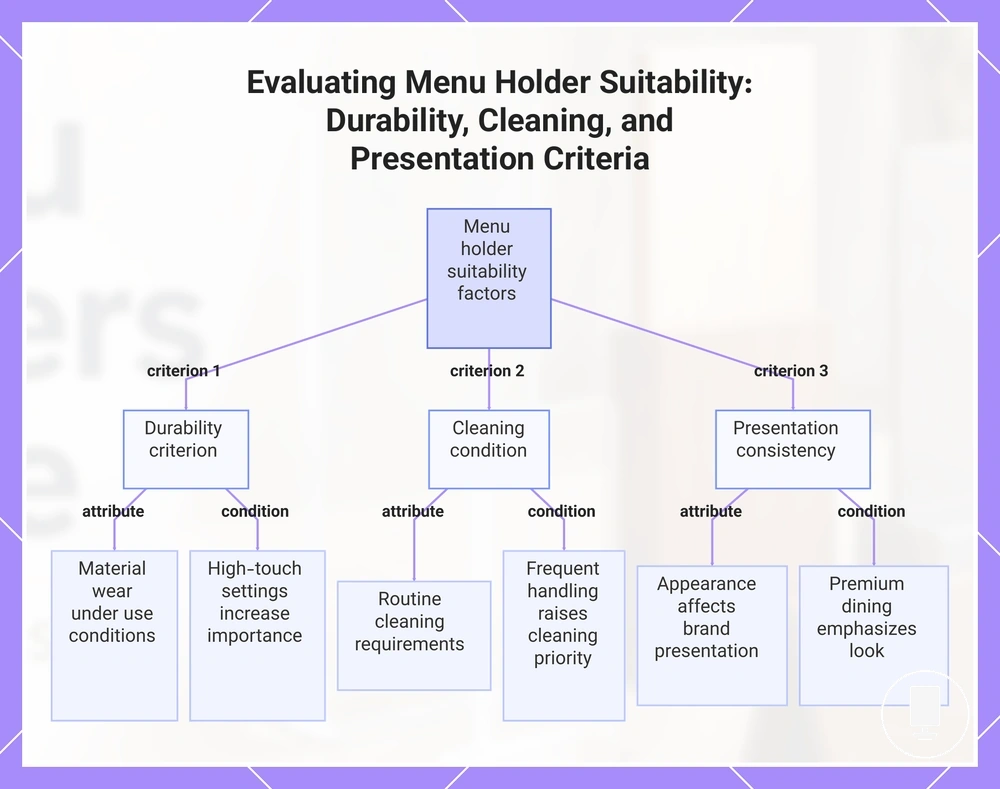
Durability, cleaning, and brand presentation effects should be evaluated together because material wear, maintenance needs, and appearance consistency can influence long-term suitability in a restaurant setting. A useful criterion considers how menu holder material responds to repeated handling, routine cleaning, and presentation expectations under actual use conditions. The local decision depends on balancing durability, cleaning conditions, and presentation consistency.
- Durability criterion: Material wear can qualify suitability differently depending on handling frequency and use conditions. Higher-touch restaurant settings may prioritize materials that maintain a consistent appearance during repeated use.
- Cleaning condition: Routine cleaning requirements can influence material selection when menu holders are handled frequently. Easier cleaning may provide a benefit where regular maintenance is expected.
- Presentation consistency: Appearance can affect brand presentation effects when menu holders contribute to the dining experience. Materials that retain a consistent look may reduce presentation risk over time.
- Condition-to-decision link: A restaurant setting may prioritize cleaning, durability, or appearance differently depending on operational needs. The trade-off becomes a decision factor when one condition has a greater effect on daily use.
High-touch tables, outdoor exposure, and premium dining presentation can change which criterion deserves more attention. Frequent handling may increase the importance of cleaning and wear control, while presentation-focused environments may place more weight on appearance consistency. The selection implication depends on which condition is most likely to influence menu holder performance in the intended restaurant setting.
This chart shows the three main criteria for evaluating menu holder suitability in restaurants and how operational context affects their priority.
Menu holder sizes, page views, and insert fit
Menu holder sizes, page views, and insert fit determine whether menu content remains readable, secure, and easy to update during service. Size selection depends on printed menu dimensions, orientation, page count, and visibility distance because a menu page may fit inside a holder while still being difficult to read or view clearly. The key sizing variables are insert dimensions, page format, orientation, page view, and visibility conditions.
Size, insert fit, and page view should be evaluated together before selecting a holder format. The table below organizes common format groups by holder size, insert or page format, orientation condition, and fit or readability implication.
| Holder size | Insert or page format | Orientation condition | Fit or readability implication |
|---|---|---|---|
| A5-format holder | A5 menu insert size | Portrait or landscape depending on the holder opening | May suit compact menus when table footprint is limited |
| A4-format holder | A4 menu page size | Portrait orientation may suit longer page layouts | May improve visibility when more menu content is displayed |
| Single-view holder | One visible page format | Portrait or landscape depends on insert layout | Can simplify reading when content appears within a single page view |
| Double-sided holder | Content divided across two page views | Orientation depends on holder design and insert placement | May balance capacity and table space when additional content is needed |
| Multi-page holder | Multiple inserts or menu pages | Orientation may vary by page format | Can support larger menus when page turning is acceptable |
Insert fit should be verified against the holder opening and stated insert dimensions rather than relying only on page labels such as A4 or A5. Orientation can affect readability because portrait and landscape layouts may present information differently at the same visibility distance. For a deeper comparison of menu holder sizes and inserts, the dedicated guide expands on page format and insert-fit considerations. A safer fit decision comes from checking the holder's stated insert dimensions before selecting a menu page size.
Common menu page dimensions and orientations
Common menu page dimensions and orientations should match both the printed menu and the holder opening to support insert fit, readability, and practical use. Page dimensions may fit inside a holder while still affecting visibility, table footprint, or reading comfort depending on orientation. The local sizing effect depends on page format, insert dimensions, orientation, and holder opening conditions.
| Page format | Orientation | Space effect | Fit check |
|---|---|---|---|
| A5 insert | Portrait | May reduce table footprint for compact menus | Verify that the holder opening matches the insert dimensions |
| A5 insert | Landscape | May improve horizontal readability when space allows | Check holder orientation and insert width before use |
| A4 page format | Portrait | May support longer menu layouts with increased visibility | Confirm that page dimensions fit the stated holder opening |
| A4 page format | Landscape | May require more table space for display | Verify both insert fit and available display space |
Compact table tents may favor smaller page formats when table footprint is limited, while larger counter displays may accommodate broader page dimensions when visibility distance increases. Orientation can affect readability differently depending on content layout and available display space. A fit decision should be verified against the stated insert dimensions and holder opening rather than page labels alone.
Page capacity, insert changes, and visibility
Page capacity, insert changes, and visibility depend on whether the holder format matches the page count, update frequency, and viewing conditions. A holder format that supports a fixed menu may require more handling effort when insert changes occur often, while a format designed for easier menu updates may better suit frequent revisions. Compatibility depends on page capacity, update frequency, handling effort, and customer visibility requirements.
- Page count: Page capacity may fit shorter or longer menus depending on the holder format and available menu capacity.
- Update frequency: Frequent insert changes may require a holder format that simplifies menu updates and page replacement.
- Viewing distance: Visibility may depend on readable display area, page count, and customer browsing conditions.
- Handling effort: Additional pages or frequent insert changes may increase update effort during routine menu maintenance.
Seasonal menus may benefit from holder formats that support periodic insert changes, daily specials may suit formats that allow easier updates, and fixed menus may place more emphasis on stable page presentation. The compatibility outcome can vary with page capacity, holder format, and update conditions, while visibility should remain clear within the available table space and viewing context.
Placement options for tables, counters, walls, and displays
Placement options for tables, counters, walls, and displays depend on where customers read or interact with the menu. The placement point can affect holder format requirements, stability needs, visibility angle, and customer interaction patterns. Compatibility depends on available space, viewing conditions, holder support, and customer access requirements.
Different placement conditions may require different menu holder characteristics to maintain readability and practical use. The table below compares placement point, space condition, holder requirement, and service outcome.
| Placement point | Space condition | Holder requirement | Service outcome |
|---|---|---|---|
| Tables | Limited table footprint and close viewing distance | Table menu holders that support stable placement and a suitable reading angle | May improve customer interaction during table service |
| Counters | Standing access and shared viewing space | Counter menu holders with visible display positioning | May support menu browsing during ordering |
| Walls | Fixed reference location with indirect customer access | Wall-mounted holders suited to the available mounting condition | May provide menu reference visibility when direct handling is limited |
| Displays | Open placement area with variable viewing distance | Menu display stands that support visibility from the intended viewing position | May improve menu access in display-focused settings |
Table service conditions may place more emphasis on reading angle and stability, while counter ordering conditions may prioritize visibility and customer access. Wall-mounted holders may suit reference-style menu viewing when direct handling is limited, and menu display stands may depend on viewing distance and placement conditions. For a deeper comparison of menu holder placement options, the dedicated guide expands on placement-specific compatibility considerations. A practical placement choice depends on whether the holder format fits the intended customer interaction and viewing condition.
Selection factors for restaurant menu holders
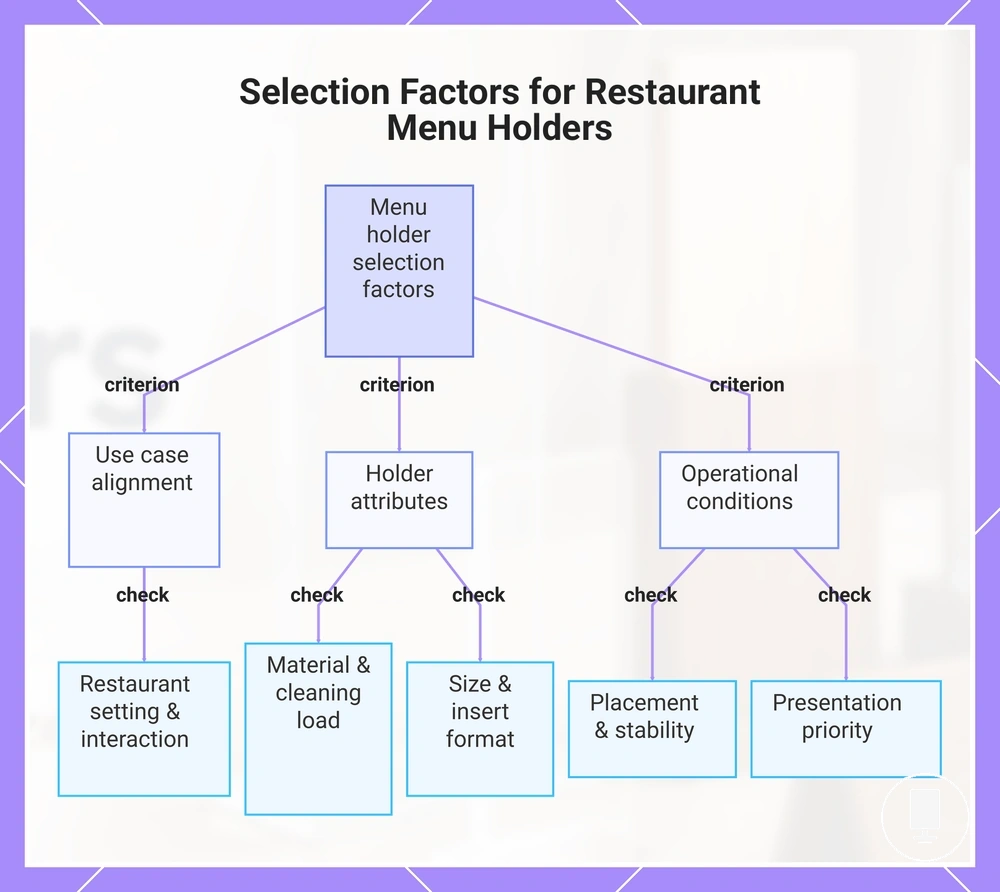
Selection factors for restaurant menu holders depend on matching the use case to the holder attributes that affect daily operation and menu presentation. Restaurant setting, customer interaction, and menu format can qualify different choices. The selection frame depends on use case, material, size, placement, stability, cleaning, and presentation priorities.
Restaurant setting often determines which selection criterion deserves more attention. A high-turnover environment may prioritize cleaning and handling efficiency, while a presentation-focused setting may place greater emphasis on appearance and visibility. Menu size can affect holder dimensions, and placement conditions can influence stability and customer interaction. These conditions form the first criteria set for choosing menu holders.
A decision checklist can help narrow options before comparing individual holder formats. The checklist below verifies whether the holder aligns with daily use requirements and presentation goals.
- Use case: Does the holder fit the restaurant setting and customer interaction pattern?
- Material: Does the material support the expected cleaning load and appearance requirement?
- Size: Does the holder accommodate the intended menu size and insert format?
- Placement: Does the placement condition support suitable visibility and access?
- Stability: Does the holder format remain appropriate for the surface and handling conditions?
- Cleaning: Does routine maintenance align with operational requirements?
- Presentation: Does the holder support the intended presentation priority and customer experience?
A selection factor becomes more useful when it is evaluated alongside the restaurant use case rather than in isolation. The relationship between size, placement, stability, and presentation may change when menu updates, customer handling, or visibility requirements change. For a deeper decision framework, see how to choose menu holders. Applying multiple criteria together can help narrow options more effectively.
Restaurant menu holders involve trade-offs between presentation, cleaning effort, placement conditions, and menu format requirements. A suitable decision often depends on which selection criterion has the greatest effect on daily use and customer interaction. The most appropriate choice is usually the holder format that aligns with the intended use case and operating conditions.
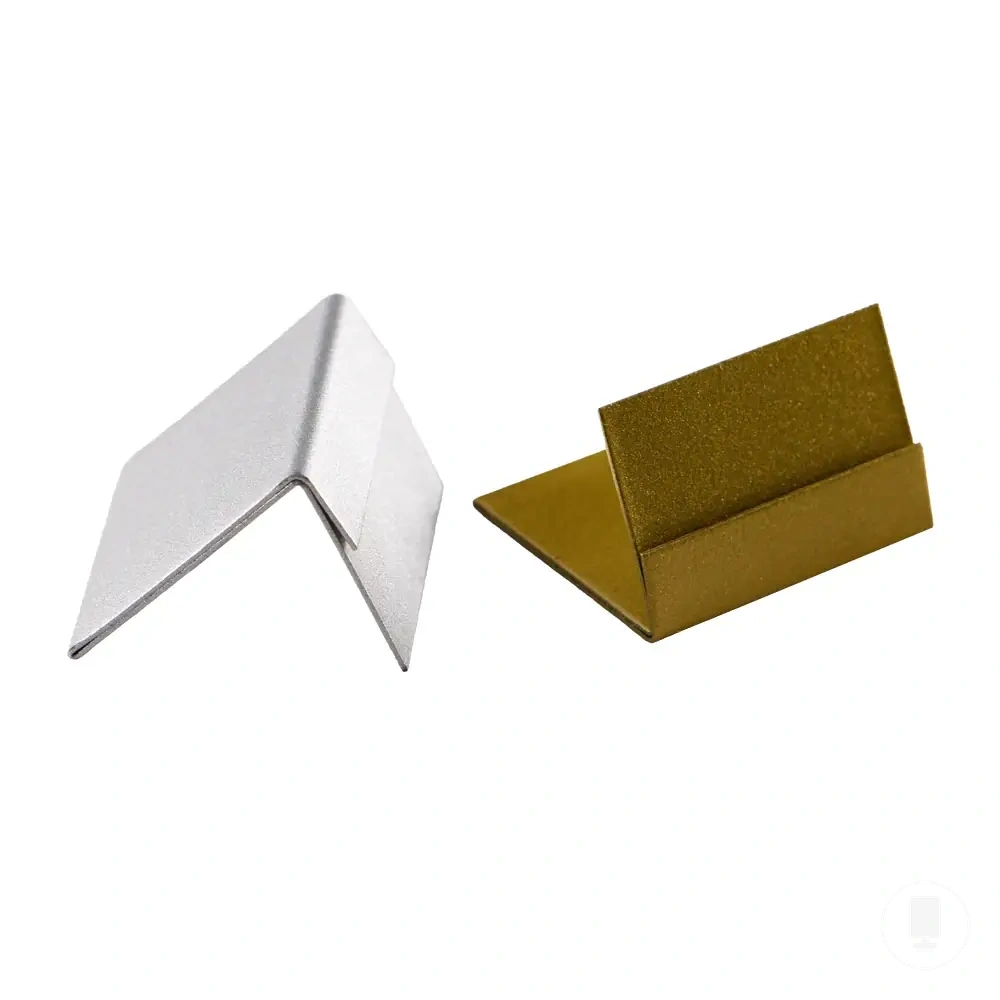
Here are product examples that may make comparison easier. Before buying, always review the compatibility criteria, essential features, and product details.
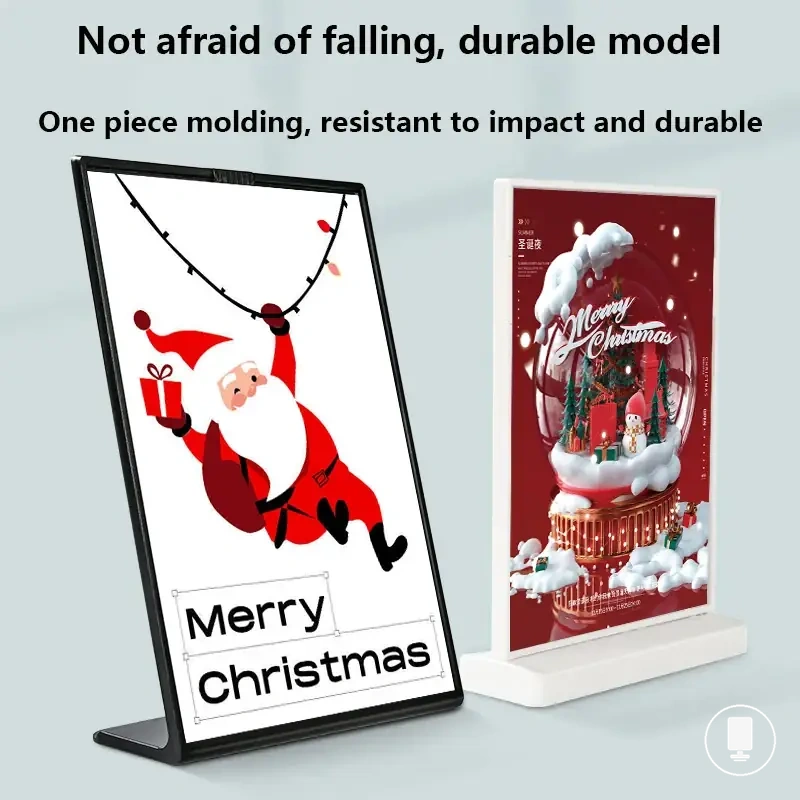
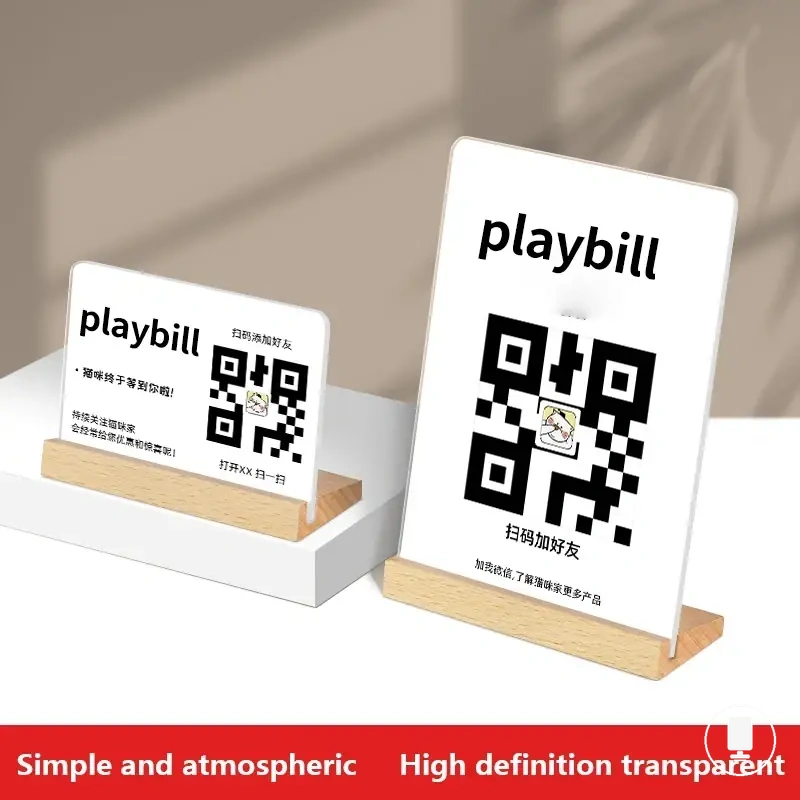
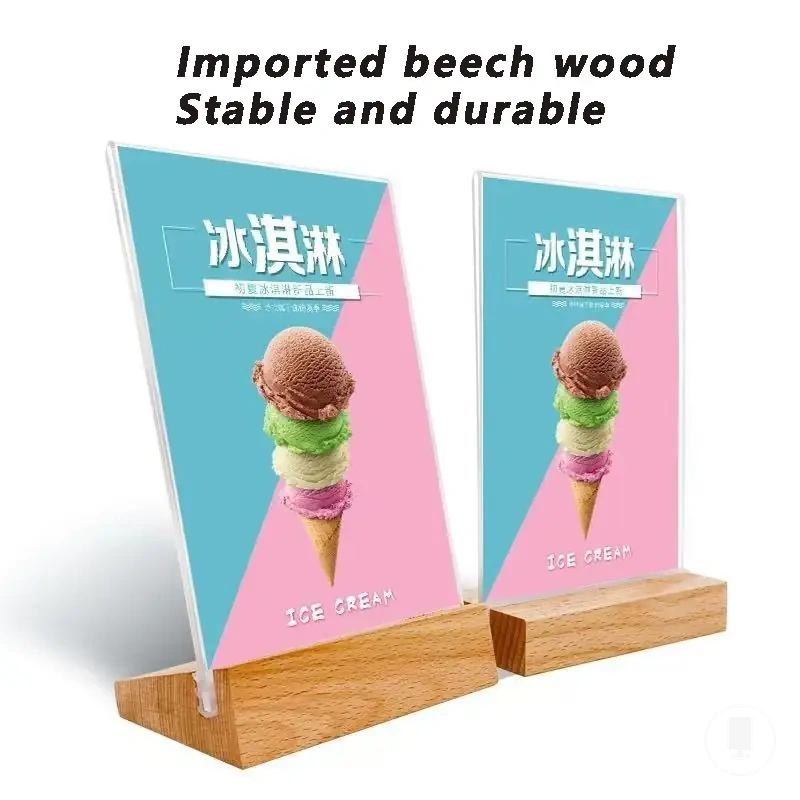
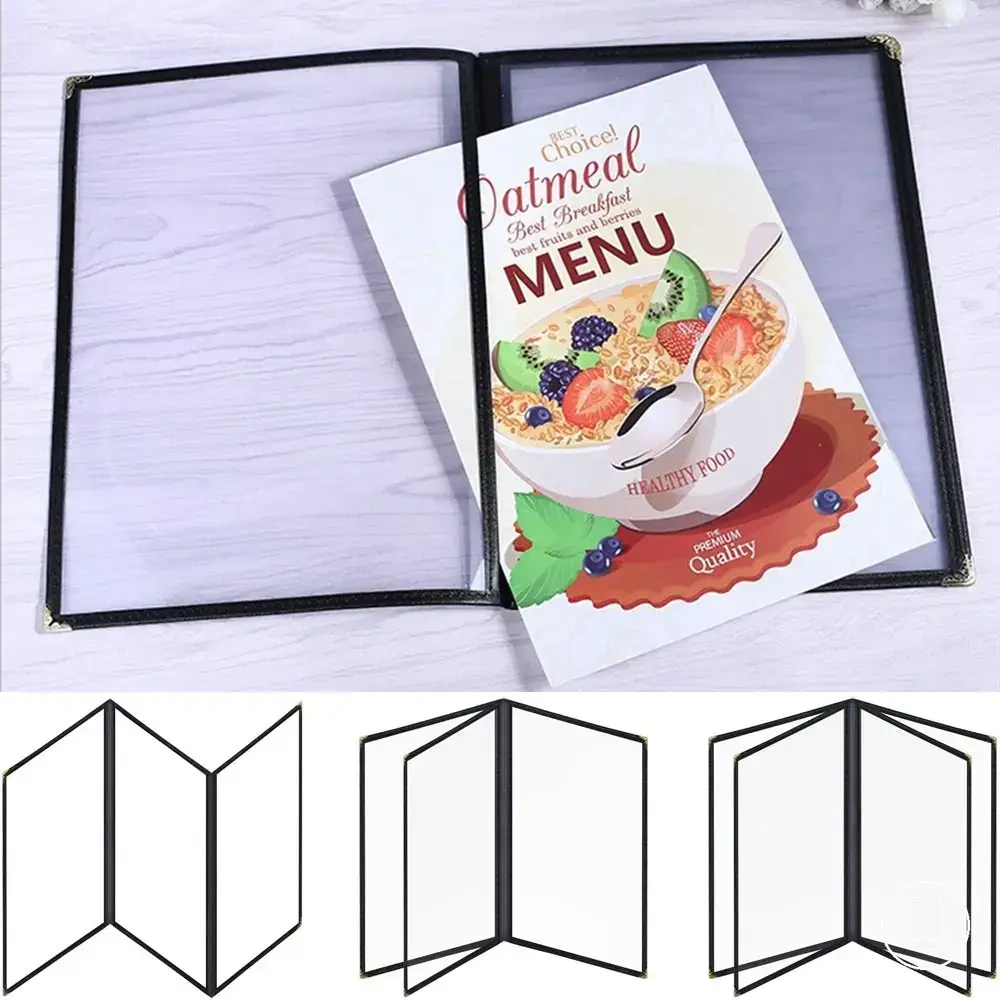
This chart shows the main criteria to evaluate when choosing menu holders, including use case alignment, holder attributes, and operational conditions.
Use case, material, size, stability, and cleaning needs
Use case, material, size, stability, and cleaning needs should be checked against the actual menu format and restaurant setting before a selection is made. Each criterion can qualify suitability differently depending on customer handling, menu size, and operating conditions. The local criterion is whether the holder attributes match the conditions that affect daily use.
- Use case: The use case should qualify the decision because table service, counter service, and display-oriented environments may require different holder characteristics and customer interaction patterns.
- Material: Material choice can affect cleaning needs, appearance consistency, and maintenance effort. The benefit depends on whether the restaurant setting prioritizes presentation or routine handling.
- Size: Size should fit the menu format and insert requirements. A mismatch may reduce visibility or create handling limitations, which can affect the selection implication.
- Stability: Stability may become a higher-priority criterion when customer handling is frequent or when table footprint conditions increase movement risk. The decision factor depends on the surface and holder format.
- Cleaning needs: Cleaning frequency can influence suitability when menus are handled often. A material that supports easier maintenance may provide an operational benefit under higher-use conditions.
Busy tables may prioritize stability and cleaning needs more than decorative appearance because repeated handling can increase wear and maintenance demands. When this condition applies, the criterion-to-decision connection may favor practical handling characteristics over presentation-focused trade-offs. The selection implication depends on which factor has the greatest effect on daily restaurant operation.
Custom branding and style consistency
Custom branding and style consistency should be treated as a selection criterion for matching menu holders to the restaurant setting, not as a separate branding strategy. Holder appearance can qualify the decision when material, finish, color, or shape affects how consistent the menu presentation feels during service. The local criterion is whether the holder’s visual style supports the intended presentation without creating a cleaning, stability, or use-case trade-off.
- Material condition: Clear holders may keep attention on the printed menu, while wood, metal, or leather-look holders may add more visible surface character. The selection implication depends on whether neutral visibility or styled presentation is more important.
- Finish condition: A finish can support appearance consistency when it suits the restaurant setting and expected handling. The risk is that visible wear may affect presentation if use intensity is high.
- Color condition: Color can help the holder blend with the dining environment or stand out as part of the table presentation. The benefit depends on whether the color supports readability without distracting from the menu content.
- Shape condition: Shape can influence perceived style and customer interaction with the menu holder. The selection implication depends on whether the shape still supports stability, visibility, and practical handling.
Neutral clear holders may suit settings that prioritize menu visibility, while more styled wooden, metal, or leather-look holders may suit restaurants that want the holder to contribute more to presentation. This trade-off should be weighed against cleaning needs, stability, and handling frequency. The decision implication depends on which visual condition supports the restaurant setting without weakening daily use.
Price and value factors for menu holders
Price factors and value for menu holders depend on material, size, quantity, customization, cleaning demand, and replacement frequency rather than on a fixed cost level. A higher menu holder cost may provide greater long-term value when durability, maintenance needs, or repeated use are important. The value frame depends on how cost factors influence long-term usability.
Cost drivers can vary according to restaurant use, holder specifications, and presentation requirements. Material and size may influence production and replacement considerations, while quantity and customization can affect overall menu holder cost. Cleaning demand may influence maintenance effort, and replacement frequency can affect long-term value over time. These factors form the main variables.
The cost-value table below compares common value factors and their decision implications. For a more detailed criteria breakdown, see menu holder price factors.
| Factor | Cost influence | Usability or durability condition | Value decision |
|---|---|---|---|
| Material | May affect initial cost | Durability and wear can vary by use conditions | Value depends on expected service demands |
| Size | Larger formats may require more material | Usability depends on menu format requirements | Choose capacity that matches actual use |
| Quantity | Total cost may change with required volume | Replacement planning depends on operational needs | Value depends on usage scale |
| Customization | Special finishes or branding may affect cost | Presentation benefit depends on restaurant setting | Justify cost through presentation goals |
| Cleaning demand | Maintenance effort may influence long-term value | Frequent handling can increase cleaning requirements | Value may improve when maintenance is easier |
| Replacement frequency | Repeated replacement can affect total ownership cost | Wear conditions vary by restaurant use | Longer service life may justify higher upfront cost |
Long-term value is often linked to durability, cleaning demand, and replacement frequency rather than to initial cost alone. A holder that requires fewer replacements or less maintenance may provide a usability benefit when restaurant use is frequent. Higher upfront cost may be justified when it supports longer use or easier maintenance, although the trade-off depends on operating conditions.
A practical value checklist compares cost drivers against expected restaurant use, maintenance requirements, and presentation goals. The most suitable decision usually comes from matching specifications to actual operating conditions rather than focusing on price alone.
Here are product examples that may make comparison easier. Before buying, always review the compatibility criteria, essential features, and product details.
Material, size, quantity, and customization effects
Material, size, quantity, and customization effects usually influence menu holder cost through physical specification and order context. A cost driver may change value when it affects durability, usability, presentation, or replacement needs. The local cost-driver frame is how each specification creates a practical trade-off for menu holders.
| Cost driver | Why it changes cost | Practical trade-off |
|---|---|---|
| Material | Material can influence production requirements, finish options, and durability characteristics | Higher material cost may be justified when the material supports longer use or easier maintenance |
| Size | Larger sizes may require more material and accommodate larger menu formats | Additional capacity can improve usability, but unused space may reduce value when menu requirements are limited |
| Quantity | Quantity influences the order context and overall menu holder cost | Higher quantities may support broader service needs, but value depends on actual usage requirements |
| Customization | Customization can add branding, finish, or specification requirements | Custom features may support presentation goals, but the trade-off should align with the restaurant setting |
Relative value depends on whether the added cost improves durability, usability, or presentation in a way that supports daily restaurant use. A stronger material, larger size, higher quantity, or customized finish should be weighed against maintenance needs and replacement frequency. The buying implication is to prioritize specifications that address a real use condition rather than features that provide limited practical value.
Here are product examples that may make comparison easier. Before buying, always review the compatibility criteria, essential features, and product details.
Care, cleaning, and replacement signals
Care, cleaning, and replacement signals help keep menu holders readable, clean, and presentable during customer-facing use. Cleaning frequency and visible wear can affect presentation quality over time, especially when holders are handled regularly. The care and replacement frame depends on recognizing condition changes before readability or appearance decline becomes more noticeable.
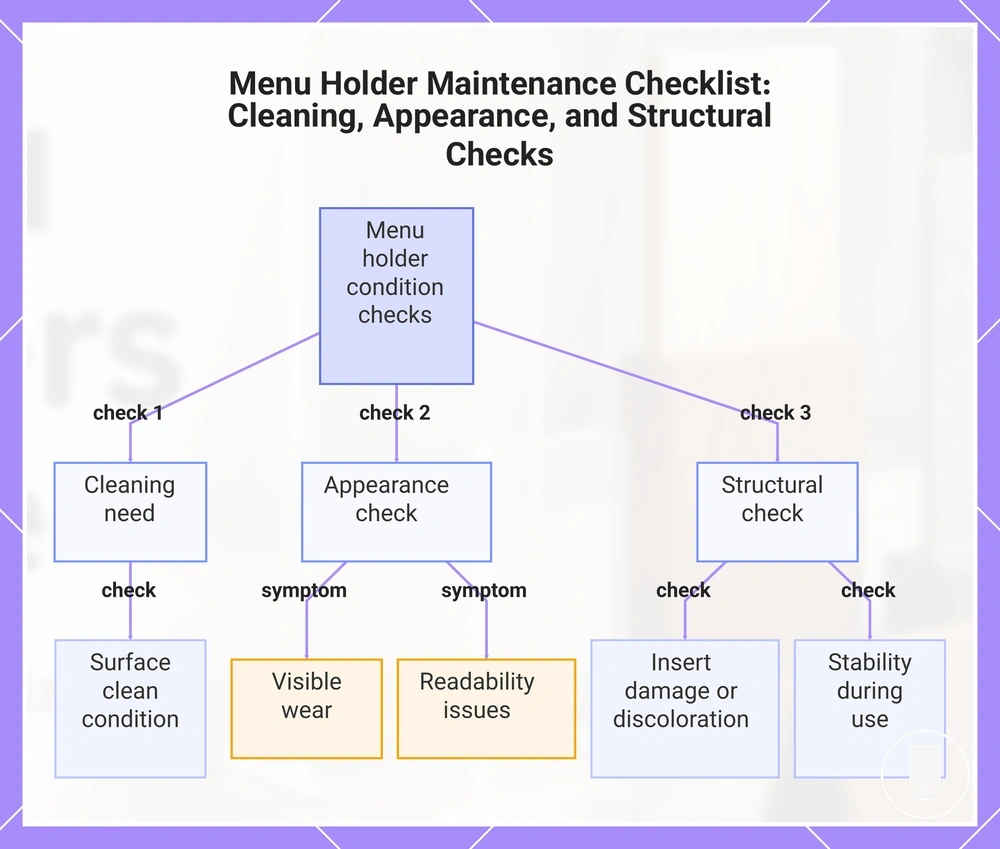
The maintenance checklist below connects material condition and wear cues to maintenance and replacement decisions. It verifies whether a menu holder remains suitable for continued use and presentation.
- Cleaning need: Check whether the surface remains clean with routine maintenance. Cleaning requirements may vary by material and finish condition, and many surfaces may be easier to wipe clean when maintained regularly.
- Visible wear: Look for wear, scratches, or surface marks that may affect presentation quality.
- Readability: Check whether clouding, marks, or surface condition reduce menu readability.
- Insert condition: Review inserts for damage, discoloration, or presentation issues that may affect customer-facing appearance.
- Stability: Check whether the holder remains stable during normal handling and table use.
- Replacement signal: Consider replacement when visible wear, readability concerns, or holder condition begin to affect presentation quality.
Basic care guidance supports routine maintenance decisions, but deeper cleaning methods and detailed maintenance steps belong in a dedicated maintenance context. Cleaning outcomes may depend on material type, finish condition, and the extent of visible wear. A wear cue or material condition should be checked before deciding whether maintenance remains appropriate or whether replacement is the better option. For more detailed guidance on cleaning menu holders, refer to the dedicated maintenance resource.
This chart outlines the three main check categories to evaluate menu holder condition and decide whether maintenance or replacement is needed.