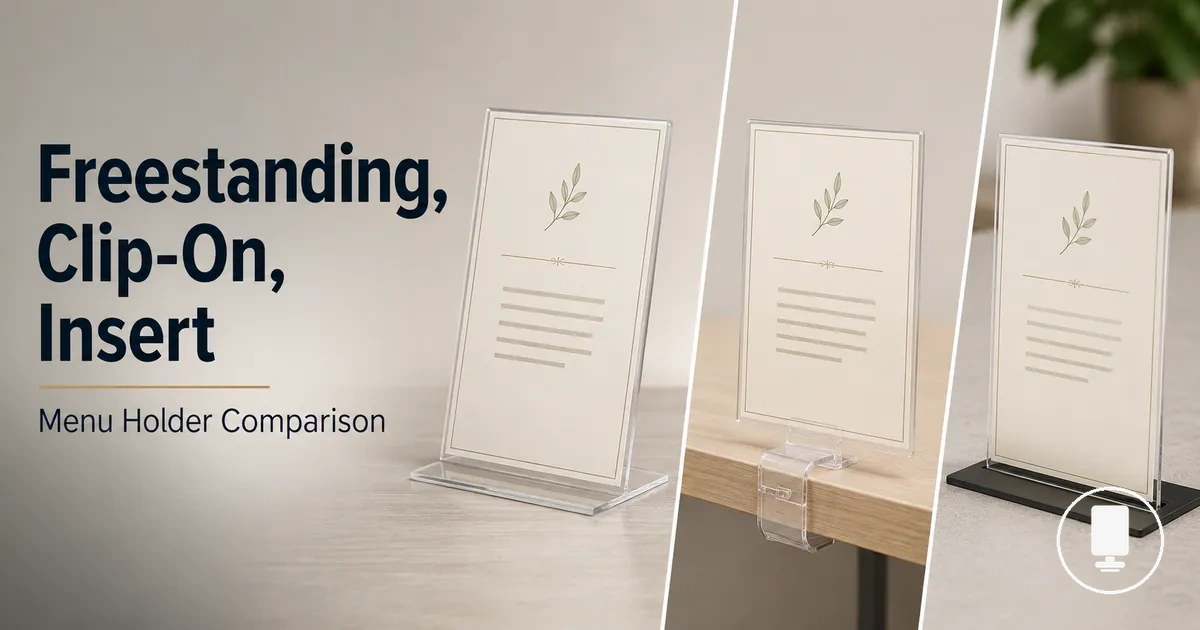
Freestanding, Clip-On, and Insert Menu Holder Formats Compared
Choosing between a freestanding menu holder, clip-on menu holder, and insert menu holder depends on how each format presents printed menu information. Each menu holder format handles placement, access, visibility, stability, and update frequency differently, which makes the comparison useful before narrower size, material, or value decisions.
On a restaurant table, a freestanding format may support an upright table display with its own base, while a clip-on format may grip a menu card when quick replacement matters. For a counter display, an insert format may suit a printed insert inside a sleeve when cleaner presentation and protection are more important than immediate handling.
No single format is universally stronger because format fit depends on venue layout, menu dimensions, handling frequency, and display conditions. This page compares the three formats as a focused decision step before broader type, size, material, and value choices. For the wider category context, use the menu holders guide.
Product markers should appear only after the lower-page criteria and recommendation logic have clarified which display format may fit the use case. That keeps the comparison decision-led rather than product-led.
What each menu holder format is designed to hold
A menu holder format is the way a display supports, grips, or encloses a menu card or printed insert. A freestanding format supports the menu from a base, a clip-on format grips the menu card, and an insert format encloses the printed insert inside a slot, sleeve, or frame.
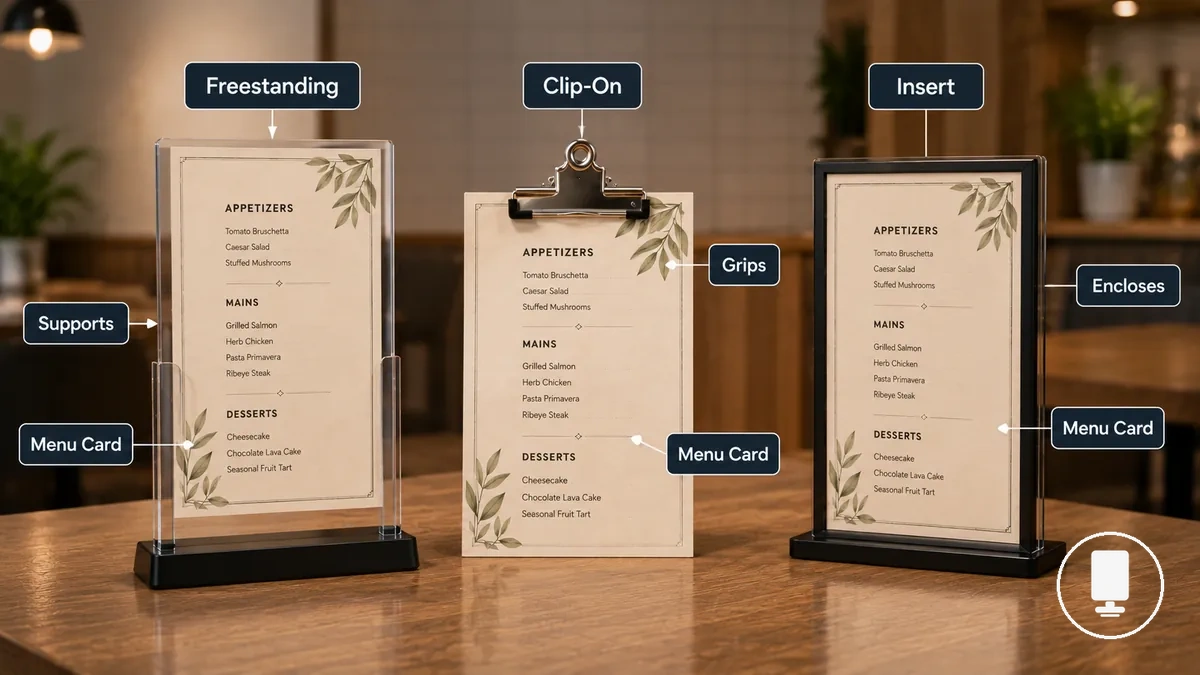
The holding method affects visibility, access, and update handling because staff and customers interact with each format differently. A format that exposes the menu card may make replacement easier, while a format that encloses a printed insert may add protection but require more handling during changes.
| Menu holder format | What it holds | Holding method | Practical effect |
|---|---|---|---|
| Freestanding | Menu card or printed sheet | Supports the menu from a base | Can improve upright visibility when the surface and menu height suit the display |
| Clip-on | Menu card or printed sheet | Grips the card through a clip or clamp | Can improve access when card thickness and grip strength match the display |
| Insert | Printed insert | Encloses the sheet inside a sleeve, slot, or frame | Can support cleaner presentation and protection when the insert size fits the holder opening |
This section compares only how the three formats hold menu information, not the full type taxonomy, placement guide, material choice, or purchase decision. The main decision implication is simple: match the holding method to the menu card or printed insert before judging appearance, value, or format preference.
Freestanding menu holders
A freestanding menu holder is a self-supporting display format that holds a menu card or printed sheet upright using a base rather than a clipped edge or enclosed insert slot. The base supports the menu card holder independently, allowing menu access from the display itself while maintaining an upright display angle on a table or counter.
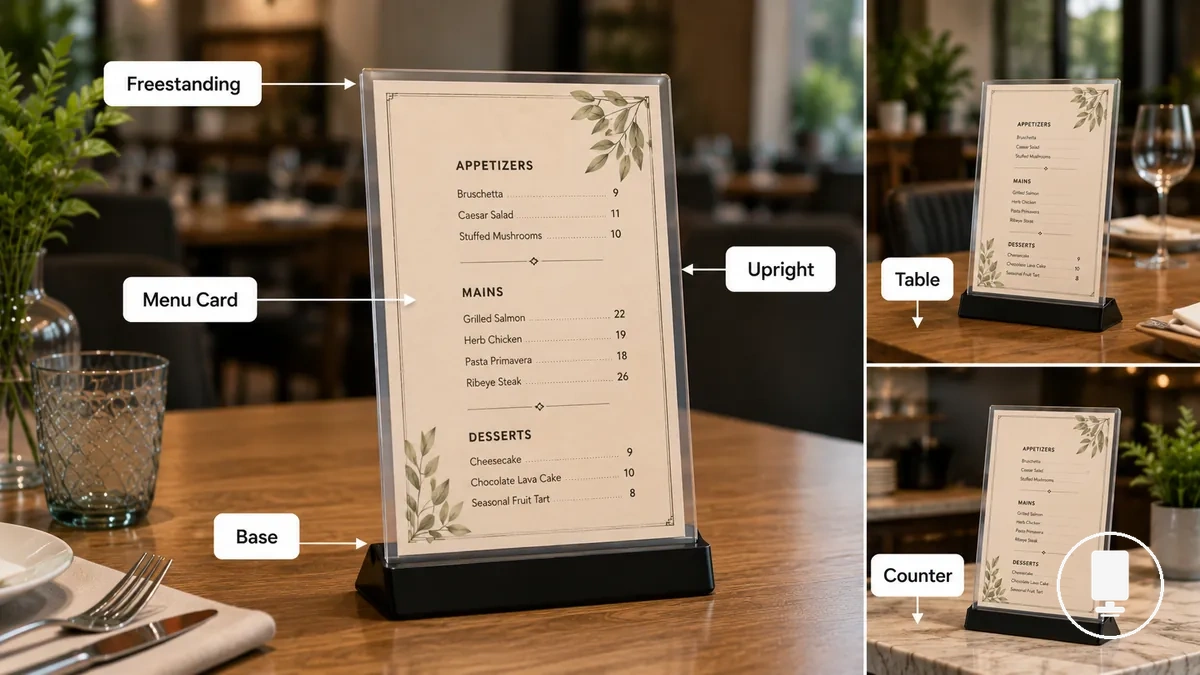
Stability may vary based on base design, material, height, and surface condition. For restaurant table or counter placement, a freestanding menu holder can provide a visible menu display when the base and placement conditions suit the intended use.
Clip-on menu holders
A clip-on menu holder is a display format that secures a menu card, sign, or printed sheet through a clip, clamp, or similar grip mechanism. The clip provides grip on the menu card while allowing visibility and replacement access, and angle control may depend on the clip design and holder structure.
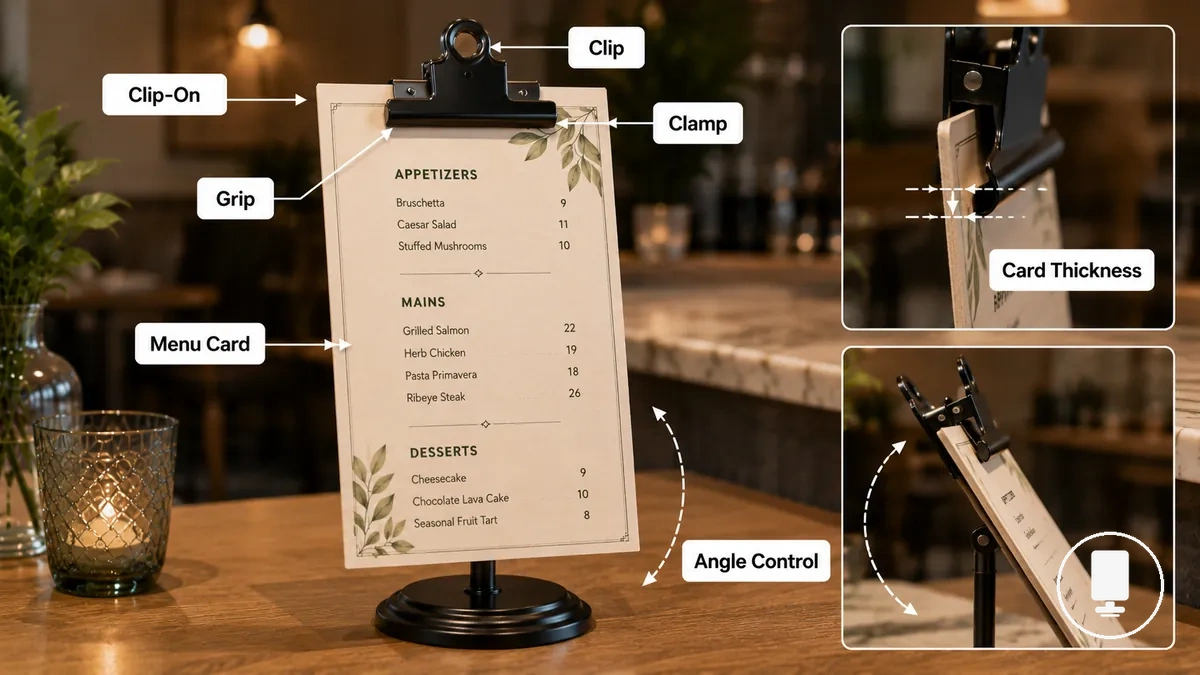
Grip performance can vary based on card thickness, clip strength, and menu-card material. For table or counter placement, a clip-on menu holder may support menu replacement access when the grip mechanism matches the printed sheet being used.
Insert menu holders
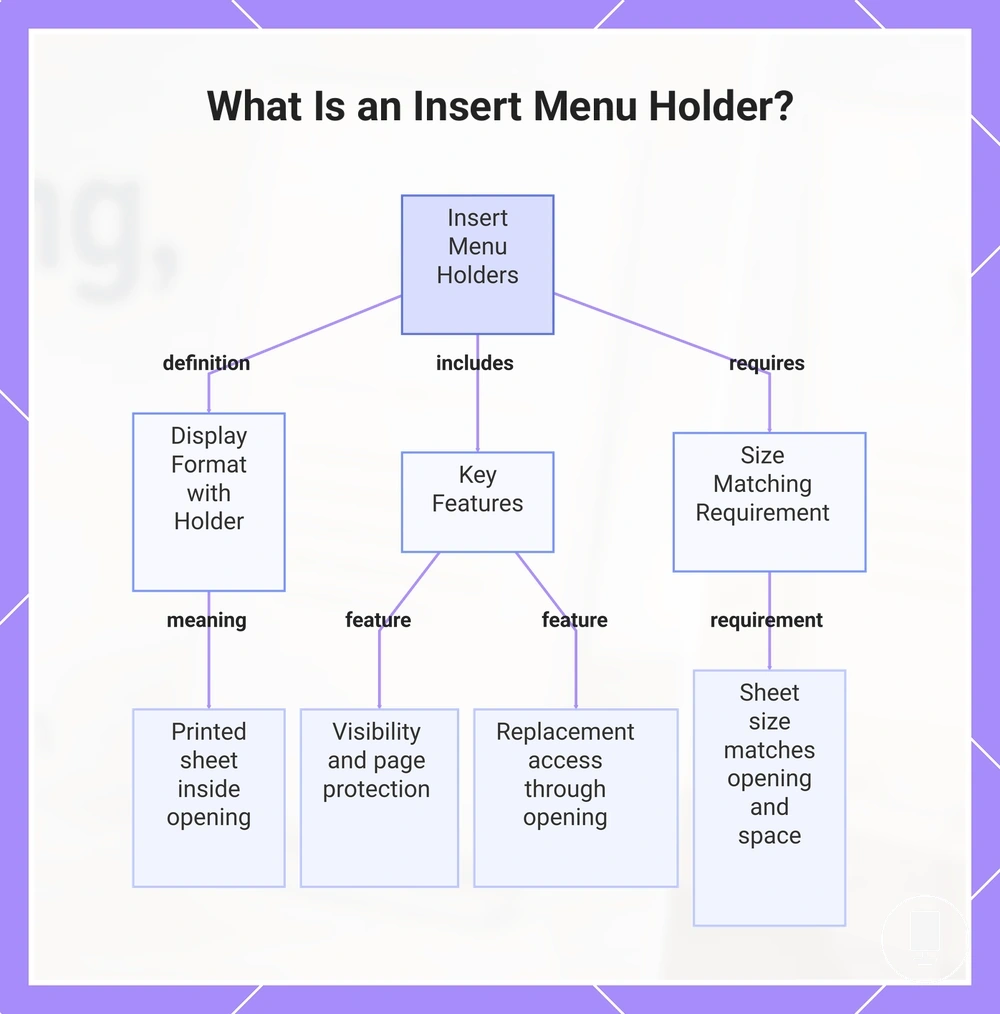
An insert menu holder is a display format in which a printed menu sheet or card sits inside a slot, sleeve, frame, or holder opening. The insert opening holds the printed menu sheet within the display while helping maintain visibility and page protection. Replacement access is provided through the holder opening when the sheet needs to be changed.
Insert menu holders may suit use cases where the menu-sheet size matches the available opening and internal space. For broader guidance on sizing and page-format considerations, see menu holder inserts.
This chart explains the definition, key features, and usage condition of insert menu holders.
Nearby menu display options outside this comparison
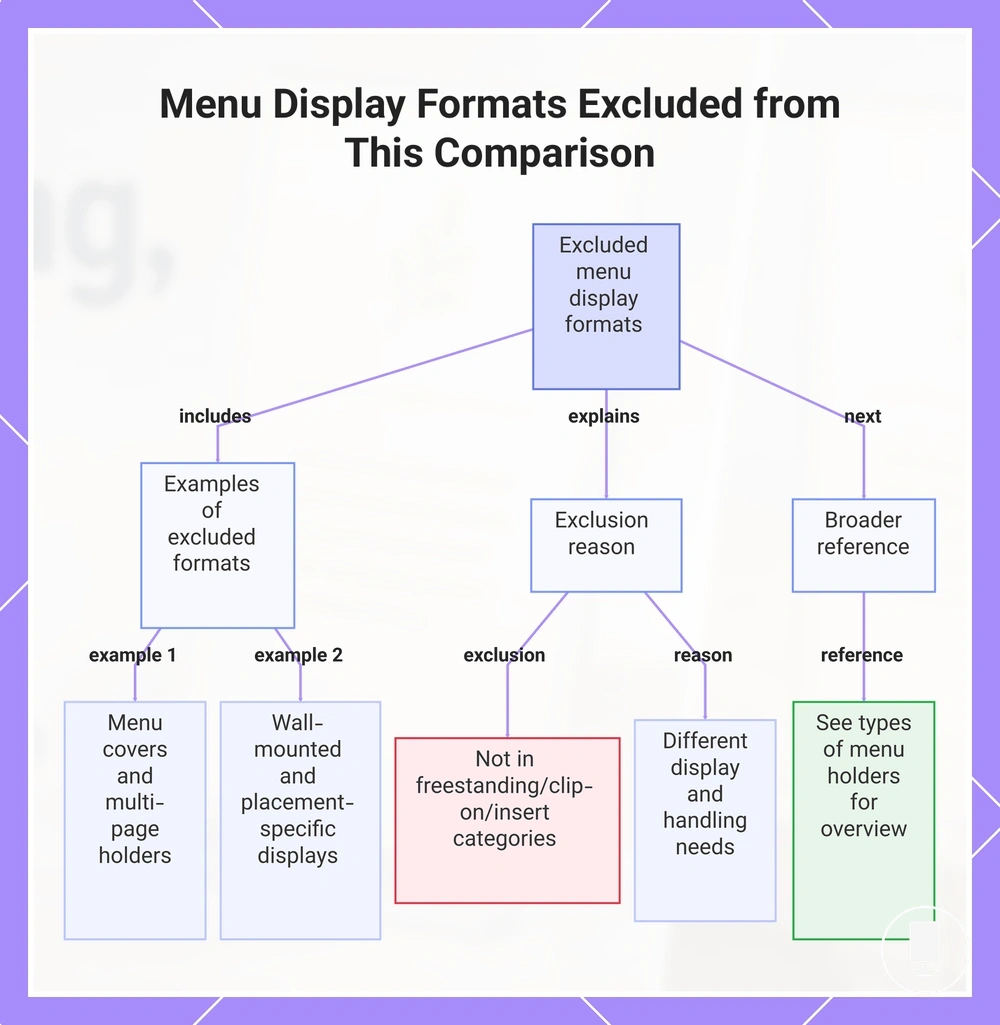
Nearby menu display options outside this comparison include formats that are not part of the freestanding, clip-on, and insert categories covered on this page. Examples include menu covers, wall-mounted displays, multi-page holders, and placement-specific displays that may serve different display and handling requirements.
This section focuses only on the three formats being compared. For a broader overview of adjacent categories, see types of menu holders.
This chart shows the menu display formats that are not part of the freestanding, clip-on, and insert categories, along with examples and the reason for their exclusion, and provides a reference for a broader overview.
How the three formats differ in daily restaurant use
Daily restaurant use depends on how the freestanding, clip-on, and insert formats handle support method, access, visibility, stability, and menu-change effort. Each format presents menu information differently, so the practical effect may vary based on placement, handling frequency, menu-card type, and service conditions.
During routine restaurant use, staff and customers interact with the display format through viewing, handling, and menu updates. A freestanding format relies on a supporting base, a clip-on format relies on grip, and an insert format relies on an enclosed opening. These operating attributes can influence presentation and replacement handling under different conditions.
| Format | Support method | Access | Visibility | Stability | Menu-change effort |
|---|---|---|---|---|---|
| Freestanding | Base-supported menu card or printed sheet | Direct access to displayed content | May support upright menu visibility | Depends on base design and surface condition | May require removal and replacement of the displayed sheet |
| Clip-on | Clip or clamp grip | Access through exposed menu card edges | May remain visible when grip placement does not obstruct content | Depends on grip strength, material, and handling conditions | May allow easier replacement access when card thickness suits the clip |
| Insert | Slot, sleeve, or frame opening | Access through the insert opening | May support a cleaner menu display with page protection | Depends on holder construction and menu-sheet fit | May require removing and reinserting the printed menu sheet |
Support method, grip, and menu access
Support method, grip, and menu access differ because each format holds the menu through a different physical mechanism. A freestanding format uses base support, a clip-on format uses clip grip, and an insert format uses an insert slot. The holding method can affect sheet access, menu replacement handling, and handling friction during restaurant use.
| Format | Support method | Menu access | Card thickness consideration | Handling friction |
|---|---|---|---|---|
| Freestanding | Base support | Direct sheet access | Usually less dependent on grip-related thickness limits | May depend on removal and repositioning during updates |
| Clip-on | Clip grip | Access through exposed sheet edges | Depends on how the menu card fits the grip mechanism | May be lower when the clip allows easier sheet changes |
| Insert | Insert slot | Access through the holder opening | Depends on the printed sheet fitting the insert slot | May be higher when sheets must be removed and reinserted |
When menu updates occur frequently, the relationship between grip, sheet access, and handling friction may become a more important decision factor. The practical effect depends on the display format and routine handling conditions.
Visibility, stability, and table presence
Visibility, stability, and table presence depend on how display angle, base footprint, and height interact with the placement surface. A freestanding format may create a more prominent menu display, while clip-on and insert formats may present different viewing-angle and customer-reach characteristics. Stability depends on factors such as material, base width, menu height, and surface condition.
- Freestanding: Visibility may benefit from an elevated display angle. Base footprint can influence table presence, customer reach, and table crowding.
- Clip-on: Viewing angle depends on the grip position and holder structure. Table presence may remain compact when the grip mechanism uses less surface area.
- Insert: Visibility depends on how the printed insert sits within the holder opening. Centre of gravity and base footprint may affect stability and placement flexibility.
On a restaurant table or counter, the balance between visibility and stability often depends on available space and handling conditions. A larger base footprint may support stability under some conditions, while a smaller footprint may reduce table crowding and alter customer reach.
Menu change speed and insert protection
Menu change speed and insert protection involve a trade-off between replacement frequency and printed-sheet coverage. A clip-on format may allow faster clip access, while an insert sleeve may provide more protection from smudge exposure. Freestanding card swaps can provide direct access to the printed sheet without fully enclosing it.
| Format | Menu change speed | Insert protection | Replacement method | Smudge exposure |
|---|---|---|---|---|
| Freestanding | May support direct card swaps | Usually limited to protection provided by the holder structure | Remove and replace the menu card or printed sheet | May remain exposed during handling and display |
| Clip-on | May allow quicker clip access when replacement frequency is high | Depends on how much of the printed sheet remains covered | Release and secure the menu card within the clip grip | May remain exposed around uncovered areas |
| Insert | May require removing and reinserting the printed sheet | Insert sleeve may provide additional sheet coverage | Slide the printed insert through the holder opening | May be lower when the insert sleeve covers more of the sheet |
When replacement frequency increases, menu change speed may become a more important decision factor. When printed-sheet coverage is prioritized, insert protection may carry more weight in the format decision.
Fit for tables, counters, and display points
Format fit depends on placement conditions such as space, traffic flow, visibility, and stability. Freestanding, clip-on, and insert formats may suit different tables, counters, and display points, but format fit depends on menu height, customer handling, surface condition, and available space.
At a restaurant table, space and customer reach may influence the format decision. At counters and display points, visibility and handling access may become more important. The balance between these attributes can change with placement conditions and traffic flow.
The comparison below focuses on format choice rather than full placement planning. For broader placement considerations, see menu holder display placements.
| Placement point | Condition | Potential format fit | Limitation to evaluate |
|---|---|---|---|
| Tables | Limited space with customer handling | Freestanding may support visibility; clip-on may suit compact placement | Check table size, menu height, and stability |
| Counters | Visibility from multiple viewing positions | Freestanding or insert formats may support menu display visibility | Check traffic flow and access requirements |
| Bar areas | Frequent handling with constrained space | Clip-on formats may suit accessible menu-card changes | Check grip suitability and handling conditions |
| Reception points | Visible display with controlled access | Insert formats may suit protected printed inserts | Check replacement access and insert dimensions |
| Display points | Presentation-focused visibility | Freestanding or insert formats may fit when placement space allows | Check base footprint, customer reach, and surface condition |
Menu size, orientation, and printed insert compatibility
Menu size, orientation, and printed insert compatibility depend on how sheet height, sheet width, thickness, and page count interact with the display format. A freestanding, clip-on, or insert format may suit different menu dimensions because larger or heavier menus can influence visibility, handling, and stability. Portrait and landscape orientation can also affect how a menu display fits on a restaurant table or counter.
When menu size increases, format fit may depend more on support method and placement conditions. Oversized cards, folded menus, and thicker printed inserts can change handling characteristics, while frequently replaced inserts may place greater emphasis on access and replacement speed. Common sheet or card sizes may serve as reference points, but compatibility depends on dimensions, orientation, and holder design rather than size alone.
Size and orientation can change display stability and readability, so the checklist below can help evaluate format fit before selecting a menu card holder.
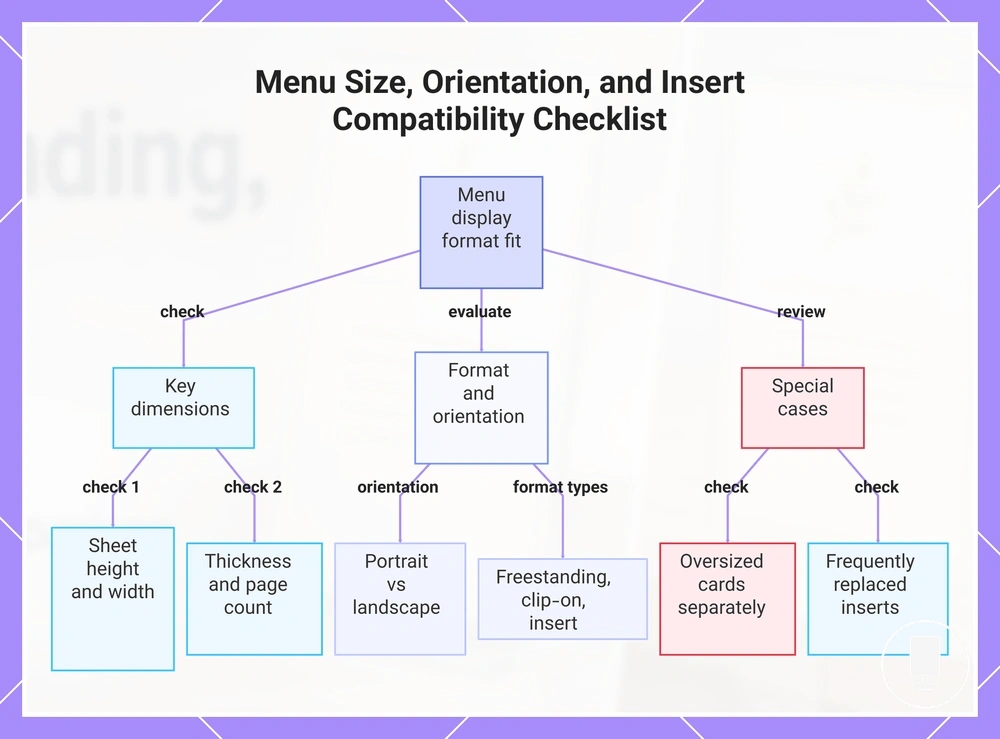
- Check whether sheet height and sheet width suit the holder opening, grip area, or support structure.
- Compare portrait and landscape orientation against available table or counter space.
- Consider thickness when a printed insert or menu card must fit within a clip-on or insert format.
- Review page count when using folded menus or multi-panel menu displays.
- Evaluate oversized cards separately because larger dimensions may affect stability and handling.
- Consider frequently replaced inserts when replacement access is a higher priority.
This chart outlines the key dimensions, format considerations, and special cases to evaluate when determining menu display format fit.
Material and finish trade-offs within each format
Material and finish trade-offs depend on how a freestanding, clip-on, or insert format is used under different handling and placement conditions. Acrylic, metal, wood-look, clear finish, and coated finishes can influence visibility, cleaning effort, weight, durability, and presentation, but the effect may vary by support mechanism and menu display design.
When cleaning frequency is high or tables experience frequent movement, the relationship between material, finish, and format may become more noticeable. The same material can behave differently across support mechanisms because weight distribution, grip design, and insert structure may change stability and handling characteristics.
The matrix below compares material and finish attributes within each format to support a condition-based decision.
| Format | Material or finish | Condition | Potential effect |
|---|---|---|---|
| Freestanding | Acrylic | Clear menu display with regular cleaning | May support visibility while keeping overall weight relatively low |
| Freestanding | Metal | Frequent table movement | Additional weight may influence stability depending on the base design |
| Clip-on | Metal | Repeated handling and menu changes | Durability may depend on grip design and handling conditions |
| Insert | Clear finish | Printed insert visibility | May help maintain menu readability while displaying the printed sheet |
| Insert | Coated finish | Frequent cleaning | Appearance and surface wear may vary by cleaning method and use conditions |
| Any format | Wood-look | Presentation-focused placement | Presentation effect depends on the display format and surrounding environment |
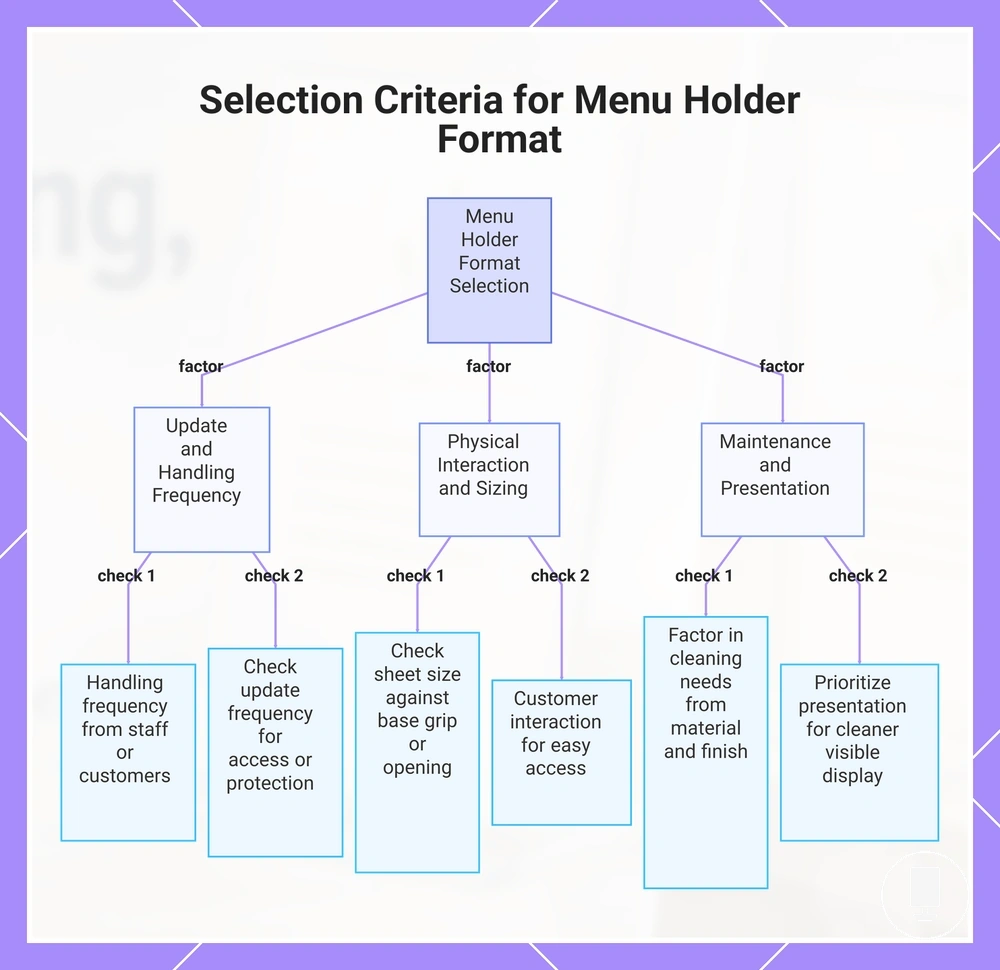
Selection criteria for choosing the right menu holder format
Selection criteria for choosing the right menu holder format depend on the use case, service style, update pattern, and display constraints. Freestanding, clip-on, and insert formats can each fit different restaurant conditions, but the right match depends on handling frequency, presentation priority, sheet size, and how customers interact with the menu display.
When two formats can both work, the deciding condition is usually the attribute that creates the most friction in daily use. A freestanding format may suit stronger table presence, a clip-on format may suit frequent menu-card changes, and an insert format may suit printed-sheet protection when replacement access remains practical.
The checklist below organizes the main decision variables before moving into a broader format-selection process. For a wider step-by-step decision path, see choose the right format.
- Match the use environment to the format’s support method, surface condition, and available space.
- Check handling frequency when staff or customers touch, move, or update the menu display often.
- Compare sheet size and thickness against the base, clip grip, or insert opening.
- Consider customer interaction when the menu must remain easy to view, reach, or replace.
- Use update frequency to decide whether quick access or printed-sheet protection matters more.
- Factor in cleaning needs when material exposure, finish, and handling conditions affect presentation.
- Prioritize presentation when the menu holder must support a cleaner, more visible table or counter display.
This chart outlines the key decision variables for choosing between freestanding, clip-on, and insert menu holder formats.
Service style and customer handling
Service style and customer handling can influence which display format fits daily menu interaction. A self-service counter may place more emphasis on visibility and customer access, while seated table service may place more emphasis on placement, handling patterns, and menu presentation. Format fit often depends on how frequently customers or staff interact with the menu display.
Service style affects menu interaction in different ways, so the criteria below can help evaluate handling conditions and handling risk.
- Self-service counter: Visibility and direct customer access may receive greater weight in the format decision.
- Seated table service: Placement, table space, and customer handling may influence format suitability.
- Staff-updated display: Frequent menu changes may increase the importance of replacement access.
- Customer browsing: Repeated handling can affect how menu cards, printed inserts, and holders are used during service.
- Handling risk: Stability, surface condition, and menu interaction patterns may influence format selection.
Update frequency and menu replacement needs
Update frequency and menu replacement needs can influence which format provides the most practical balance between access speed and printed-sheet protection. When menus change often, staff effort and replacement access may become more important. When updates occur less frequently, card durability and printed insert coverage may receive greater attention.
Menu update patterns can be evaluated through the criteria below.
- Daily specials: Frequent changes may increase the value of quicker menu replacement access.
- Seasonal menus: Lower update frequency may place more emphasis on presentation and printed-sheet protection.
- Printed inserts: Format suitability may depend on how easily inserts can be removed and replaced.
- Card durability: Repeated handling may affect how menu cards and printed sheets are maintained over time.
- Staff effort: Replacement effort can vary based on the format, access method, and update pattern.
Format value by durability, cleaning, and presentation
Format value depends on long-term suitability rather than upfront price alone. Durability, cleaning effort, replacement effort, and presentation quality can affect how a display format performs under daily restaurant conditions. The value of a format often depends on which attribute carries the most weight for the intended placement and handling pattern.
When menu displays experience frequent handling, cleaning effort and replacement effort may become more important decision factors. In presentation-focused settings, stability, finish quality, and printed-sheet protection may justify selecting a format that better matches the venue condition. The trade-off depends on how durability, access, and presentation interact within the display environment.
The comparison below organizes format value through attribute-based trade-offs rather than product availability or price comparisons. Long-term suitability is usually clearer when each format is evaluated against the condition it is expected to handle.
| Format | Attribute | Venue condition | Value effect or trade-off |
|---|---|---|---|
| Freestanding | Durability | Frequent table movement | Value may depend on stability, material choice, and surface condition. |
| Freestanding | Presentation quality | Visibility-focused table or counter display | Greater table presence may support presentation but can require more placement space. |
| Clip-on | Replacement effort | Menus updated regularly | Accessible grip mechanisms may reduce staff effort during menu replacement. |
| Clip-on | Cleaning effort | High-touch handling environments | Cleaning requirements may depend on holder construction and exposed surfaces. |
| Insert | Presentation quality | Protected printed-sheet display | Printed inserts may appear more contained, but replacement access can require additional handling. |
| Insert | Durability | Repeated use with printed inserts | Long-term suitability may depend on insert fit, handling frequency, and material condition. |
Decision signals often come from the attribute that creates the largest operational trade-off. When stability supports visibility goals, when printed-sheet protection supports presentation quality, or when finish quality aligns with the display environment, a higher-value option may be justified by long-term suitability rather than a single feature alone.
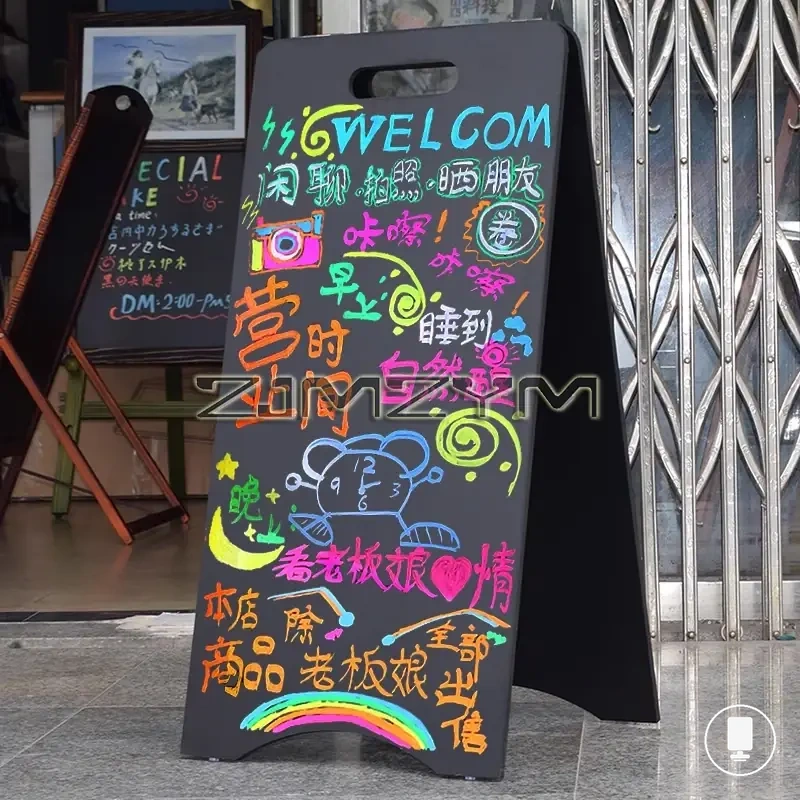
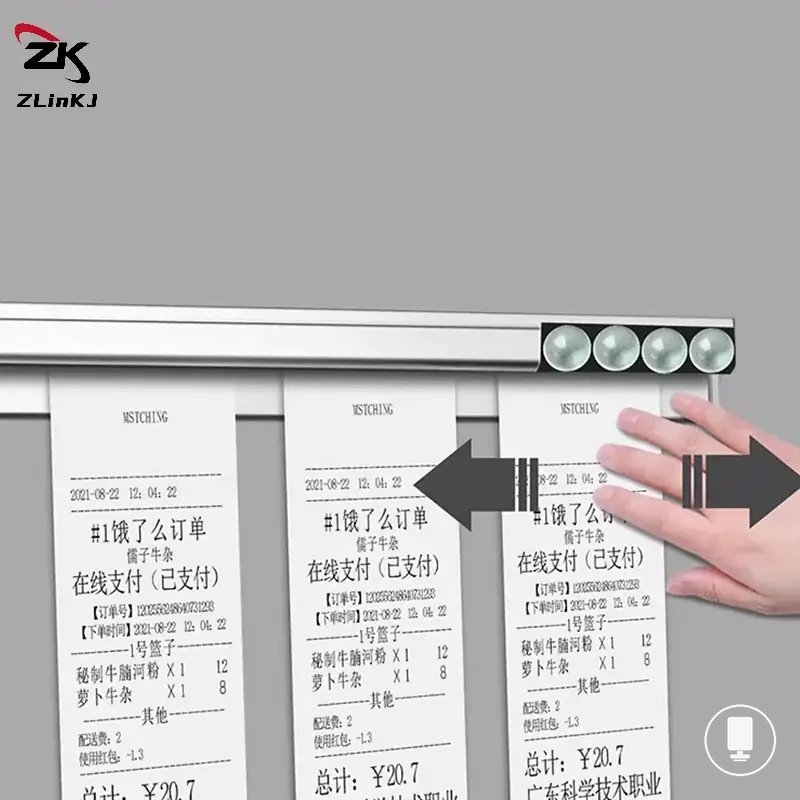
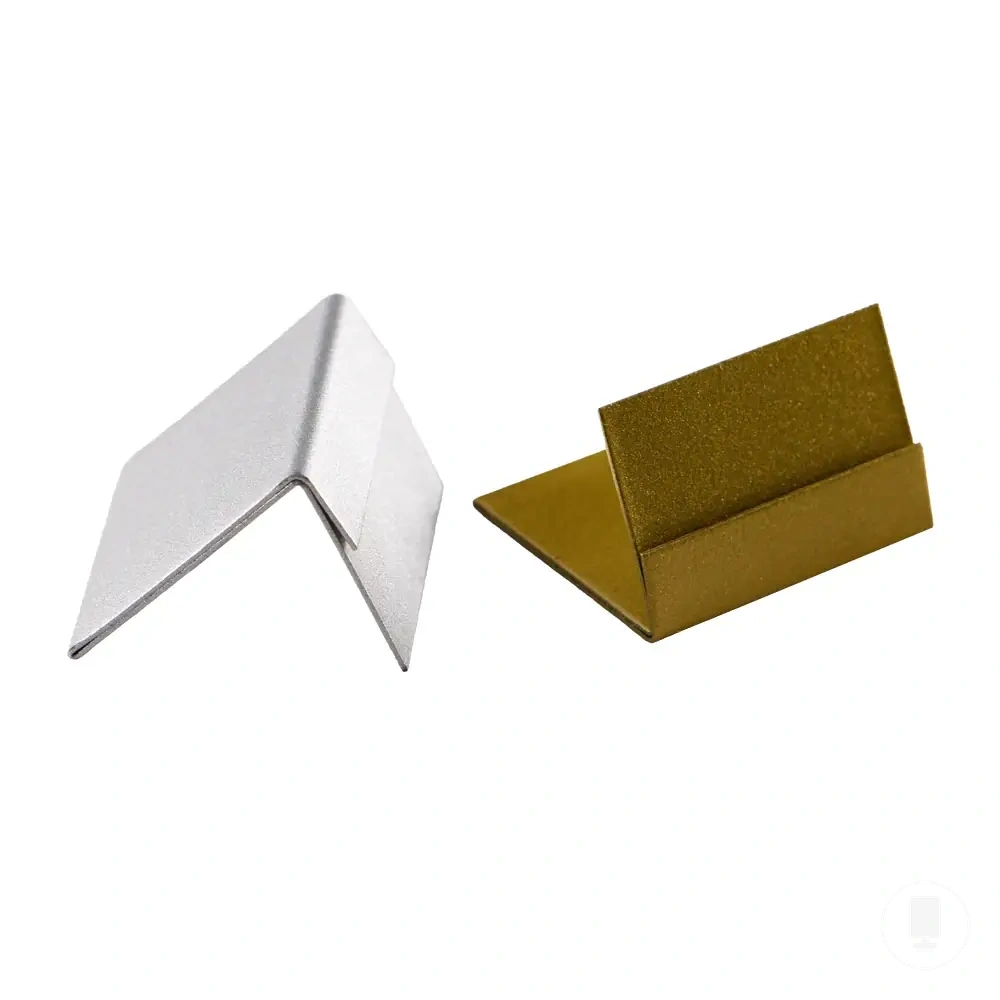
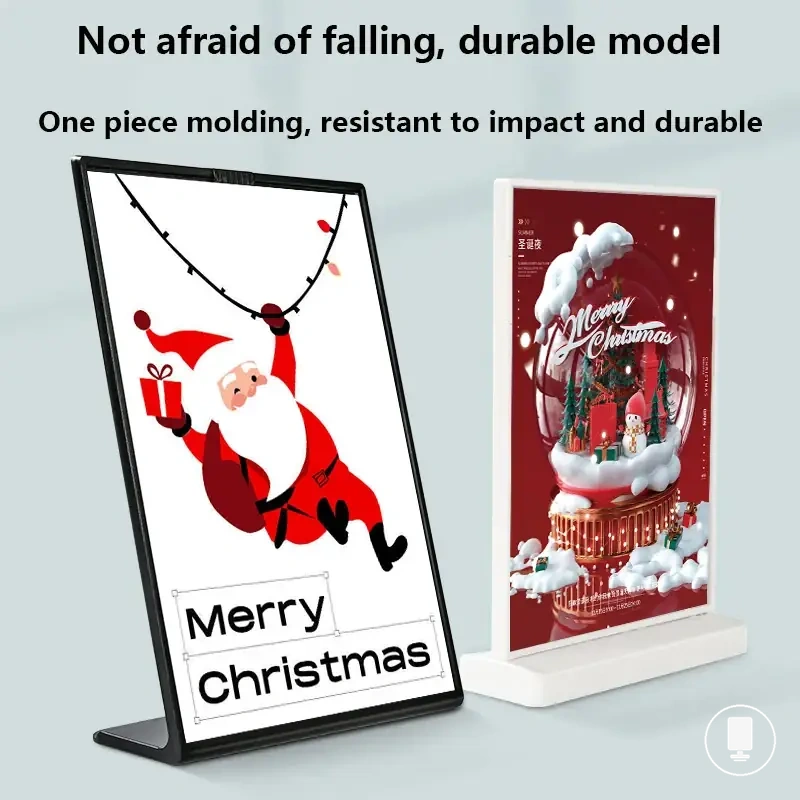
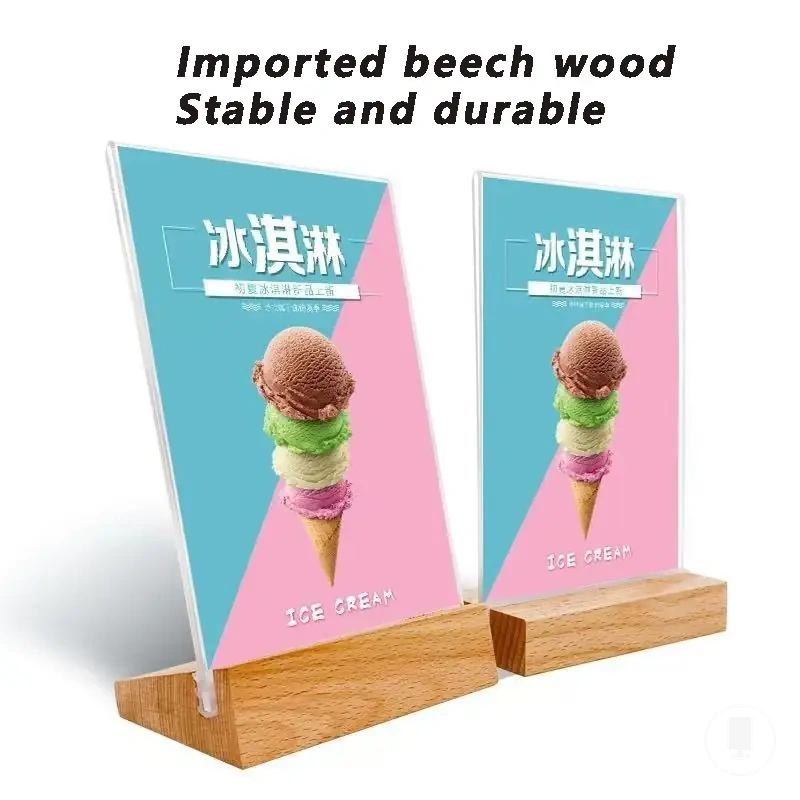
Here are product examples that may make comparison easier. Before buying, always review the compatibility criteria, essential features, and product details.
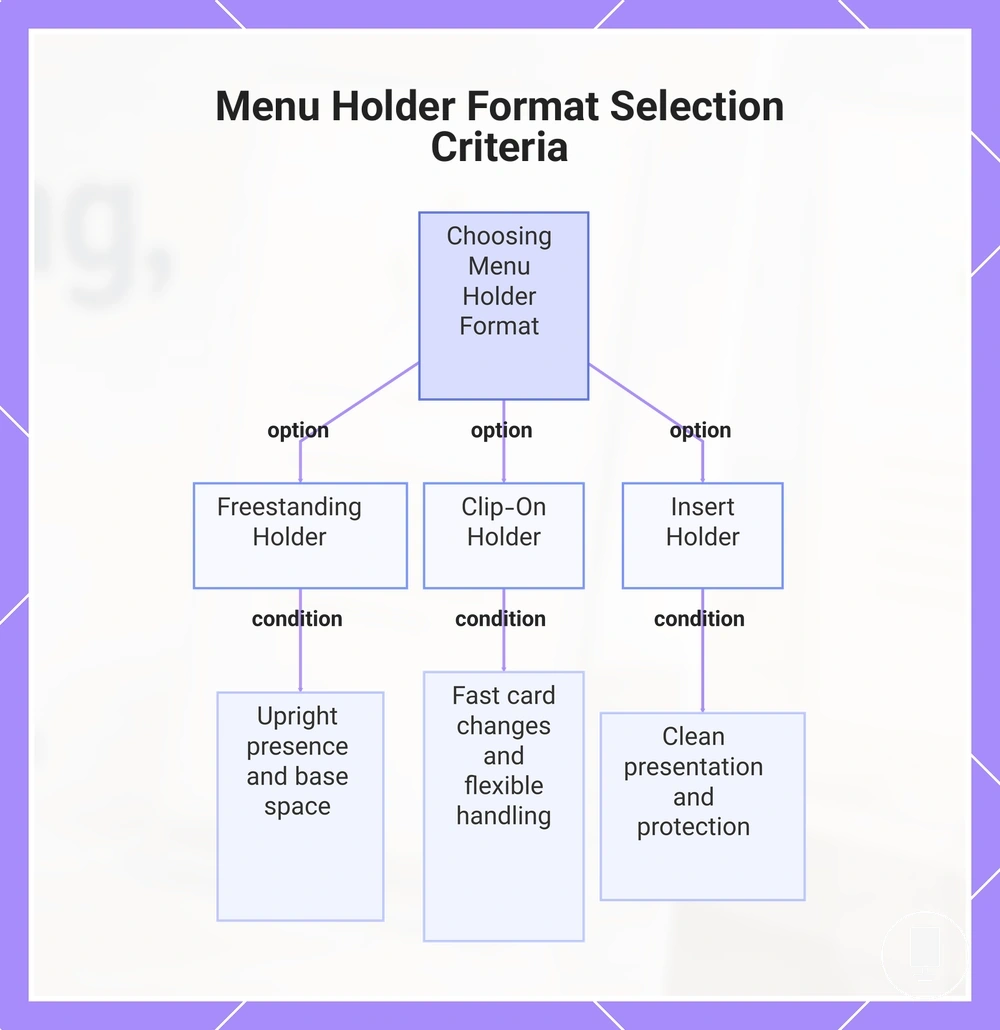
When freestanding, clip-on, or insert menu holders are the better choice
Freestanding, clip-on, or insert menu holders become the better choice only when the format matches the placement, update frequency, handling pattern, and presentation priority. The decision should stay conditional because each format performs differently under table, counter, menu-card, and printed-insert conditions.
Choose freestanding when upright presence matters for a table or counter display and the available space can support the base. This format may be the stronger choice when visibility and table presence matter more than fast card changes.
Choose clip-on when fast card changes or flexible display handling are more important. This format may suit menus that change often, provided the card thickness, grip, and handling conditions support the display.
Choose insert when cleaner sheet presentation or printed-menu protection matters more than immediate replacement speed. This format may be the stronger choice when the printed insert fits the holder opening and replacement access remains practical.
The final decision cue is to match the format to the strongest operating condition: placement for freestanding, update frequency for clip-on, and presentation priority or printed-menu protection for insert formats.
Here are product examples that may make comparison easier. Before buying, always review the compatibility criteria, essential features, and product details.
This chart shows the three menu holder formats and the key conditions that determine which one to choose for your display.